Annual report 2024.
The Paralympics is the goal.
You’re standing in front of a wide goal on a hard court with two of your teammates on either side of you. You’re blindfolded. The crowd is silent. You can’t hear anything except your own heart beating through your chest. Then, your ears pick up a faint jingle from the other end of the court. The sound gets louder and louder as you brace for the impact of a heavy ball hurtling at sixty kilometres an hour to hit your body. Funnily enough, you dive towards the jingling sound and consequently the ball, to stop it from entering your goal. You feel the ball hit your leg and the jingle stops. The crowd erupts in a cheer.
This is Goalball, a sport created for people who are blind or have low vision. Guide Dogs Client Zara has experienced the adrenaline rush of playing at an elite level for the last few years. She’s competed in the NSW Goalball team since 2019 and internationally for the Australian women’s Goalball team, the Aussie Belles since 2022.
“I want to go to the Paralympics one day. That’s been my dream for as long as I can remember,” Zara says.
Zara was introduced to Goalball at a Guide Dogs Youth Holiday Camp by one of the camp’s speakers, Goalball Paralympic Athlete Amy Ridley.
“Amy kept telling me to come and try Goalball just for fun so when I eventually did, from the first session I was hooked.”
Playing Goalball at an elite level requires discipline and long hours of training. Zara fits in five training sessions a week by herself and with trainers in the gym, two on-court sessions every week and training camps with the rest of the team over some weekends. With players scattered all over the country, everyone travels interstate to attend camps to train intensively before coming home with feedback and implementing it at a state level.
“It’s a lot of self-driven training everyday but then we use the time we have together as a team effectively to work on combinations and strategy,” says Zara.
Even though her ultimate goal is to get to the Paralympics one day, Goalball has taken Zara to twelve different countries already, including the World Championships in Portugal and the Youth World Championships in Brazil where her team snagged a silver medal.
Many of the overseas competitions are International Blind Sports Federation (IBSA) qualifiers where teams compete for a chance to represent their country at the Paralympics.
However, jet setting is nothing compared to the community Zara’s met through the sport. Teammates have turned into gym partners and then into friends. Travelling together for weeks at a time always helps foster that strong bond.
“The community is the best part of it. We get along and squabble like a little family. Everyone’s got low vision so we can all empathise with each other and help each other out with different aspects of our lives.”

Colin stays connected.
Colin is an active and involved member of his community. Whether he is volunteering, getting involved at his church, discussing current affairs with his men’s group, or performing at the local theatre, Colin strives to stay as engaged in community life as possible.
Colin has retinitis pigmentosa and is legally blind. At 88 years young, Colin is a long-time Client of Guide Dogs NSW/ACT and has accessed a range of services over the last 40-odd years. In particular, the Orientation and Mobility training Colin has received from Guide Dogs allows him to safely navigate the community, get to where he needs to go, and do what he is passionate about.
Colin is involved with a charitable organisation where he volunteers to provide cooked meals to those doing it tough. Once a week, Colin travels to the kitchen where meals are prepared. He helps by washing up and spending some time talking with Clients. Thanks to the training he received from Guide Dogs, Colin is able to call a taxi, get into the kitchen and confidently move around.
Colin is also actively involved in a choral group and in last 12 months has started singing with a local theatre organisation. He is currently involved in a three-week production of Priscilla Queen of the Desert. Much like a busy kitchen, Colin says that moving around the backstage of a theatre is like navigating a minefield. While he acknowledges he can’t do everything everyone else can do and may need a hand from time to time, Colin doesn’t let accessibility hurdles get in his way.
With the support and training he has received from Guide Dogs, Colin is able to navigate the chaos of the theatre and remain confident in his abilities to get involved in the community activities that are meaningful to him.

Bodie knows no bounds!
Everyone has a different idea of fun. For some people, the perfect day involves going to the movies, curling up on the couch with a book and going for a walk by the beach. For others, it’s sleeping in a bivy (a low-lying tarp held up at two points by rope) while it buckets down with rain after hiking with a heavy pack containing your essentials for the next 10 days. Guide Dogs NSW/ACT Client Bodie is one of these people.
At 14 years old, Bodie went to his first Outward Bound camp with Guide Dogs in 2022. He experienced what it was like to sleep in the bush, cook outdoors on a fire and participate in team games and activities like high ropes and abseiling. From then on, he was hooked and attended another camp the year after.
“The first camp opened me up to the outdoors as my family isn’t really big on that sort of stuff. The second camp really helped me understand how lucky I was to have the independence I did when I was outdoor living,” Bodie said.
Bodie took the bush life in his stride so much that he was recommended by one of the camp’s instructors for a 10-day expedition that involved hiking every day, cooking for himself and the rest of the group and navigating to the next camping spot each night.
The expedition was challenging, but “there were so many highlights”, says Bodie. “But the best and most surprising part of the whole trip was when I was elected to lead the group for the last three days.” When Bodie was chosen by 13 other group members to lead them home for the last stretch of the trip, he rose to the challenge and experienced what practical leadership involved. At 16 years old, Bodie can proudly say he led a group of adults through the bush without getting everyone too lost, made sure the group tasks were completed and managed to survive a 24-hour period on his own with no instructors or other group members.
“The hardest part of the 24-hour stint alone was setting up my bivy by myself. Although when morning came, I was shocked to find out that my set-up was the best of the group,” Bodie says.
The expedition wasn’t all blue skies and campfire karaoke songs. On the longest walking day of the expedition, Bodie had to traverse through swamp and tall grass, so it was difficult to tell what was ahead of him. Stepping directly into the water meant his boots, socks and feet were soaked and freezing. “I have this distinct memory that night of the cold feeling around my toes. I was very glad I brought spare socks.”
When the trip was almost over, Bodie felt like he experienced a year in 10 days, but at the same time, he also felt like not much time had passed at all.
“We packed up our bivys and the rest of our stuff and when we were walking to get picked up, I thought ‘wait a minute, we aren’t going to be out in the wilderness anymore,’” Bodie says.
Upon reflection, when Bodie arrived home to the luxuries of suburban living, he realised the best part of the expedition was not experiencing bush life at all, but the opportunity he had to “meet the most wonderful people.”
“I learned the motivating power of music, how to accept help when you need it and I’ve made long lasting friends,” Bodie says.

The power of a Therapy Dog.
Imagine having nightmares almost every night or finding it difficult to leave the house by yourself, run errands and socialise because of the trauma you’ve experienced? This was the reality for Rachel, until she was matched with her Therapy Dog, Keanu.
The journey to getting a Therapy Dog is one that takes patience and perseverance. For Rachel, the wait was worth it.
Rachel has PTSD, and with that comes nightmares almost every night. Some nights, she couldn’t bear to sleep with the lights off. When Rachel spoke to a friend who had a Guide Dogs NSW/ACT Therapy Dog, she thought she would give it a try.
“I needed an affectionate dog that wasn’t easily distracted because I live in a busy city area where there are a lot of other dogs,” said Rachel. “I thought I was going to be waiting a while, but it all happened so quickly. Keanu seemed to be meant for me.”
Within seven weeks of being assessed and eligible for a Therapy Dog, Rachel received her match. When she was matched with her Therapy Dog Keanu, her life changed for the better.
Rachel was apprehensive at first about just how much a Therapy Dog could help her with her anxiety and PTSD. She didn’t expect all the little things Keanu would support her with, like her confidence and adaptability, let alone her nightmares and anxiety.
“I have PTSD and have nightmares all the time. Since being matched with Keanu, I have only had one nightmare within a month of having him,” Rachel says.
Before Keanu entered her life, Rachel used to stick to a strict routine and would only leave the house with her Support Workers. Now, she gets her morning coffee whenever she wants, hangs out with her friends and goes to her appointments by herself.
“My Support Workers used to come five to six times per week, but since I’ve gotten Keanu, they are down to two or three times per week. I have a lot more confidence to go out and do things by myself,” says Rachel. Keanu is now Rachel’s “little shadow” and comes with her wherever she goes. “He comes along to my therapy sessions and he does so well.”
Rachel and Keanu have learned to walk together and are continually practicing commands and recall skills. The positive impact Keanu has had on Rachel is incredible, as he provides her with comfort, companionship and emotional support.
Upon reflection, what’s helped Rachel the most is the reassurance she incidentally gives herself when caring for Keanu. Since Keanu is very attached to Rachel, he needs reassurance that they are both safe and together. When Rachel verbalises this out loud to Keanu, she also confirms her safety and stability in her own mind.
“First, I had to go and save my own life. I had to get well to make sure I could care for him, as he takes care of me,” Rachel explains. “Now when I’m telling him, ‘we are okay’, I’m also incidentally reassuring myself. It’s an unexplainable feeling knowing I can feel that way.”
With 86 Therapy Dogs matched with their new Handlers last year, it’s great to understand the powerful impact they have on our Clients to allow them to live life their way.

Margaret's amazing journey: 20 years of puppy love.
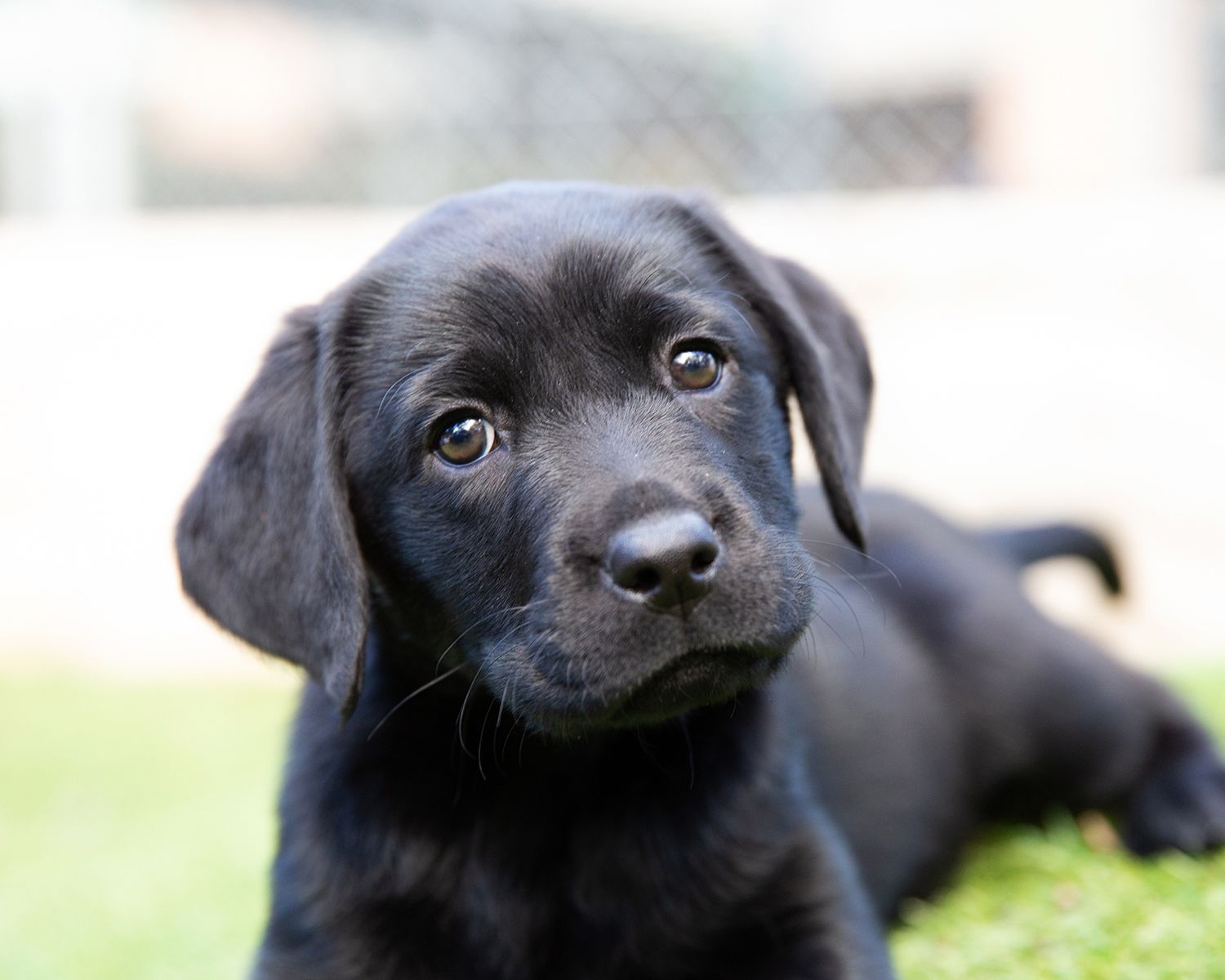
For over two decades, Margaret has been a quiet but powerful force behind the scenes of Guide Dogs NSW/ACT, raising 27 beautiful puppies who have gone on to change many lives.
Her journey began with a suggestion from her local vet after her beloved Labrador passed away from cancer. What started as a way to heal, turned into a lifelong passion. “It is very tough at times, but it’s so worth the effort,” Margaret shares. “It gives me a great feeling of achievement. Before you know it, one pup becomes two, then three and so on.”
Margaret has helped raise some very special dogs like Vonny, Granger, Yale, Jagger and Kosmo, all of whom have grown into incredible companions for people with low vision or blindness. She says the most rewarding part is knowing the impact each dog will go on to have. “I am so proud of the dogs. It’s such a special feeling knowing they will be life-changing to their Handler.”
Saying goodbye never gets easier. But for Margaret, the pride always outweighs the sadness. Each pup leaves a permanent pawprint on her heart.
“It’s not about me,” she says humbly. “It’s about what the dogs go on to achieve. "Now, with plans to continue raising pups well into the future, Margaret is still as dedicated as ever, giving back to her community in the most generous, hands-on way. Could you be the next Margaret? If you’ve got love, time and patience to give, you can help raise a future Guide Dog and change someone’s life forever.

Shan celebrates 45 years!
My name is Shan and I have been involved with Guide Dogs NSW/ACT for 46 years now. I have worn many hats during my time at Guide Dogs, from Assistant to the CEO to Client Services Administrator and now Receptionist.
During this time, I’ve witnessed many exciting changes. I joined Guide Dogs NSW/ACT when we were located at Milsons Point, with only eight staff members in an office overlooking Luna Park. We were known as ‘Royal Guide Dogs Australia’ at that time. I was Executive Assistant to the then CEO Jim Jones who asked me to assist the two Mobility Specialists.
At that time, appointments with Clients were listed on a whiteboard. We then progressed from a manual typewriter (only to be seen in museums now!), to an electric one and then backing up floppy discs in the early computer days, which I had to back up every Friday night.
I’ve seen firsthand the change in variety and scale of support Guide Dogs offers people with low vision or blindness. Guide Dogs NSW/ACT has grown from a small team operating out of Sydney into multiple teams working across regional NSW and the ACT, providing all manner of services, including Orientation and Mobility (O&M), Occupational Therapy (OT), Assistive Technology (AT) and more.
The culture, the rationale and the strategy of how we operate has always been what I admire and witnessed in my years of talking to Clients.
The recent showcase of our updated Strategy 2030 focusing on accessibility, low vision, and embracing the future of digital and technological advances is more than exciting.
Beyond our services, Guide Dogs has grown to become a source of empowerment for our Clients, as well as an advocate for improved accessibility and inclusion for people with low vision or blindness. It’s just another reason I feel proud and privileged to be part of Guide Dogs.

Gulliver’s travels.
Paul has been a volunteer with Guide Dogs for 12 years and Gully’s personal chauffeur for 10 of them.
“I got involved with Guide Dogs when I saw an advertisement on TV and then I became a Puppy Raiser,” says Paul. From then on, Paul’s been volunteering his time selling merchandise at events, talking to people about Puppy Raising and becoming a Puppy Pal. When Paul was asked to drive Gulliver to an event 10 years ago, he fell in love with it.
“It was so much fun driving him around. I have an immense feeling of joy when I drive Gulliver and see the smiles on people’s faces when he passes by. Everyone loves to take photos of him too, so it takes me three times as long to get anywhere with Gully on my trailer because we get stopped all the time.”
This year Gulliver led our Mardi Gras float entitled ‘Leading the Charge’ in an amazing multicoloured sparkly progress flag created by George Roppingly-Goode, winner of Making it Australia.
Paul described his experience driving Gulliver at Mardi Gras as “incredible.” He said, “I was so excited for Gully to be in the parade. It was such a special moment.”
He was also spotted on Bondi Beach to raise awareness for International Dog Day, and at our St Leonards office for International Guide Dog Day celebrations.
Paul drives Gully around because he “loves it so much. Everything about Guide Dogs manifests in Gulliver and I love to educate people about low vision or blindness when they ask me about him.

Angela is a true community champion!
For over 40 years, Angela has relied on her Guide Dogs to help navigate daily life, with each partnership bringing connection, confidence and independence. Angela received her first Guide Dog in Ireland in 1982. Now aged in her seventies and living on the Central Coast of NSW, Angela is partnered with her sixth Guide Dog, Jolie. When it comes to her latest Guide Dog, Angela jokes that she got exactly what she ordered: a laid-back, two-and-a-half-year-old dog who fits seamlessly into her lifestyle.
“I do a lot of fundraising, so I wanted a dog who’d be happy to sit around for a couple of hours while we operated our stall, selling merchandise. As well as a dog that would be happy to be out of harness to allow people to come up and talk to her and let children give her a pat.”
Before she was paired with Jolie last year, Angela planned ahead with Guide Dogs NSW/ACT so she wouldn’t have to go a single day without a life-changing companion. “My 11-year-old Guide Dog, Piper, retired on the 19th of May, and I got Jolie the next day.”
Her two girls get on well. “They’re great buddies,” says Angela. “They play a lot in the garden together.”
Angela reckons that, despite being much older, Piper has more energy than Jolie now. Probably because Piper gets to relax at home while Jolie guides Angela along the streets, on public transport, through shopping centres and around the Central Coast.
When she’s off duty, Jolie loves to go for walks and relax by the water, happily watching the world go by. Or she’ll curl up in front of the fireplace at home, a habit she picked up while being puppy raised in Canberra.
Angela lives an active lifestyle that includes volunteer work for Guide Dogs NSW/ACT, being part of the Country Women’s Association (CWA), catching up with friends at local cafés, giving talks at events about being a Guide Dog Handler, and spending quality time with her family and friends—all activities that are made easier by Jolie’s highly trained assistance.
With just two percent vision in one eye, Angela says Jolie takes a huge mental load off by giving her the freedom to move around without worrying about obstacles. “I can go out in the morning, and I might need to go to the chemist, so I ask Jolie to find the traffic light and find the chemist. It lets me relax and just listen to the sounds of birds and nature around me,” she says.
Jolie is also a huge help at the supermarket. With specialist training from a Guide Dog Trainer, and lots of repetition, Angela and Jolie learned the supermarket layout so well that clever Jolie now helps with the grocery shopping. “I can go to the supermarket now, and I can tell her to find the shopping baskets, and she’ll find the baskets. Then I say I need bananas, and she brings me straight to the bananas. Then I’ll say I need milk, and she takes me right over to the milk,” Angela says.
Angela enjoys going out to a café with friends from the CWA on Wednesdays. She and Jolie are warmly welcomed by local venues, but Angela still faces some accessibility challenges—such as needing her friends to read the menu to her. Recently, though, she’s been experimenting with AI glasses that read printed text aloud, giving her even more independence.
In 2009, Angela and her late husband moved to the Central Coast to be closer to their daughter Edele, son-in-law and now teenage grandchildren. Bringing her Irish Guide Dog with her, Angela had to adjust not only to a completely new area but to an entirely new country. That’s when she first reached out to Guide Dogs NSW/ACT for help.
“Guide Dogs absolutely went out of their way to give me orientation and make me feel comfortable around my area—to travel on the trains and buses—because it was a whole new ball game to me, a whole new life,” says Angela.
Angela was so grateful to Guide Dogs NSW/ACT for their assistance that she wanted to support them in return. “The reason why I got involved with Guide Dogs was because I really wanted to give something back to them as they gave so much to me,” she says.
So, she joined the Central Coast Guide Dogs Support Group. Sixteen years later, she’s still volunteering with them, running fundraising stalls and events across the region at least twice a month. The group is made up of dedicated volunteers who sell merchandise in shopping centres and Bunnings stores across the Central Coast, speak at functions and events, and build partnerships with local community groups—all to raise awareness and funds for Guide Dogs NSW/ACT.
Angela’s 16 years of tireless volunteer work were recognised with a Lifetime Member Award at last year’s Annual General Meeting, honouring her dedicated service to Guide Dogs.
“I feel so grateful to the people who give money to Guide Dogs NSW/ACT through fundraising, bequests, and donations at our stalls. The money goes towards training Guide Dogs to help people like me, as well as to people who are a lot younger who do a lot of travelling around the community. Without the support of donors, and the back-up from the Puppy Raisers looking after the dogs in their first crucial 12 months, we wouldn’t have our Guide Dogs—and we wouldn’t have our full independence, and that’s a fact,” she says.

.jpg?rect=0,38,1500,1125&w=1200&h=900&fit=min&auto=format&q=90)
