Welcome
Catching the Guide Dogs bug.
Hello, my name is Sue and I became involved with Guide Dogs in 2002 as a Puppy Raiser with my very first Labrador pup named Crystal. She was our first introduction to Labradors as we had other breeds as pets beforehand.
Crystal also began my dedication to helping raise these gorgeous pups with the special outcome of becoming Guide Dogs.
I have had quite a few voluntary roles, including puppy nurturer (this is where I came to the campus to cuddle the puppies and got them used to contact with people); puppy deliverer to first-time raisers; broody stockholder (this is looking after our gorgeous mums as they deliver the next generation of working Guide Dogs); and assistant to the instructor at puppy classes. I felt very proud and honoured to help out in these roles and, of course, loved it all.
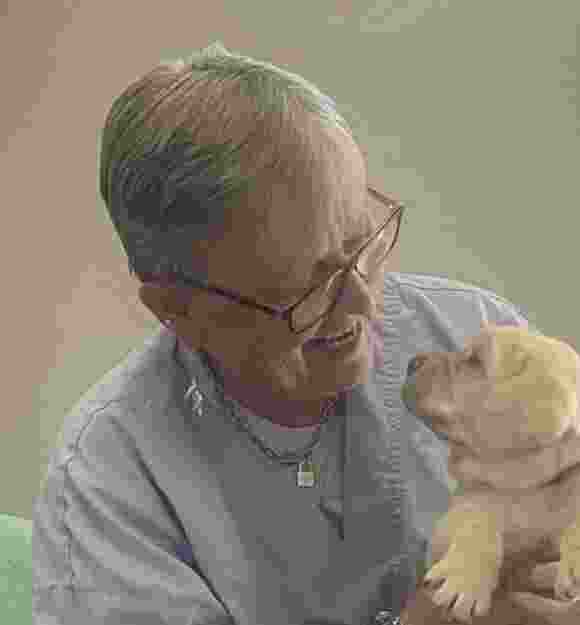
In my time as a Puppy Raiser with Guide Dogs, I have raised 19 pups, all with a mixture of career paths. I have raised two breeding dogs (Heidi and Hannah); four Guide Dogs (Cajun, Varyn, Ilsa and Okie); five Therapy Dogs (Crystal, Zandrie, Angel, Willa and Oreo), one Ambassador Dog (Zoron); six pets (Darcy, Tully, Volku, Kossack, Alira and Kolby, who is now our family pet) and we are currently raising a beautiful girl pup called Melody.
The staff at Guide Dogs have always been very welcoming and helpful with everything I do and always approachable with any queries or advice. Over the past 20 years as a volunteer I have met and become friends with many like-minded people who also love giving back to the low vision or blind community.
I hope to spend many more enjoyable years raising pups for their important roles at Guide Dogs. After 19 pups it’s clear that I have cemented my love for Guide Dogs.
Kind regards,
Sue
Our cover star: Bentley
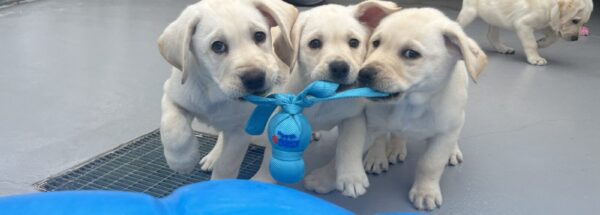
Our latest cover star is Bentley. He is just starting his journey to becoming a life-changing Guide Dog or Therapy Dog. Your support for dogs like Bentley can help bring independence and freedom to a person with low vision or blindness.

Pet tips
Protecting your dog against foreign objects.
Foreign objects are items that can cause obstruction in a dog’s intestines. This can be life threatening by causing damage to the intestine, systemic infection or even cardiovascular shock.
Obstructions can be caused by non-food items such as rocks or batteries, or even food sources, such as corncobs, mango seeds, bones and kebab sticks.
The worst kind of foreign objects is a linear one. This is where the dog has eaten a product that is long and thin, such as a piece of rope or material. With linear foreign objects, several metres of intestine can be damaged as it becomes bunched around the item.
For dogs that are destructive, or have a propensity to ingest things, they should not use fabric toys, but larger hard plastic toys that cannot be ingested.
Signs of obstruction include:
- Lethargy
- Vomiting
- Lack of appetite
- Abdominal pain
Should you suspect your dog has eaten something that can cause harm, visit the vet immediately. If the dog has swallowed the item within the past couple of hours, your vet may be able to make it vomit the item up before it causes damage.
Dogs off duty
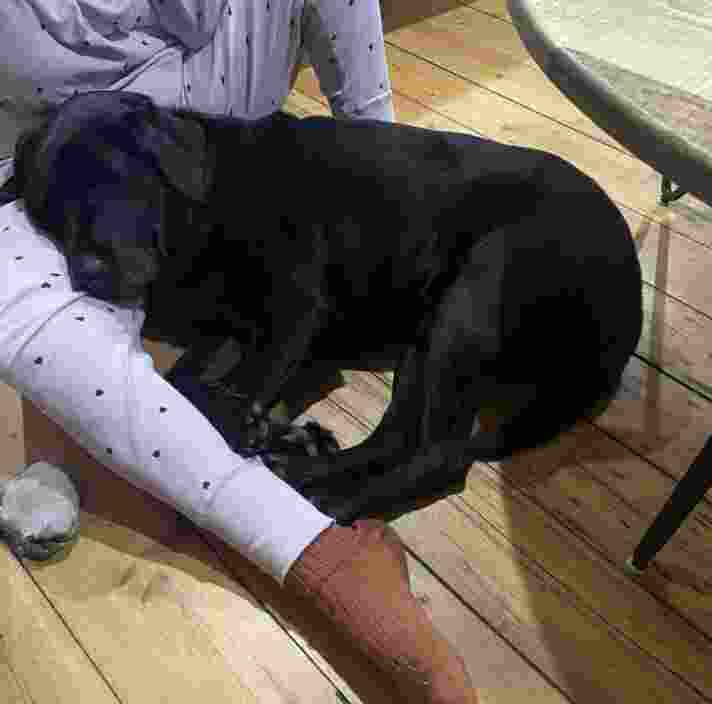
“From the time I brought him home, my Guide Dog, Jet, very quickly let me know that despite weighing 36 kg, he identified as a ‘lap dog’. While sitting on the couch he would place his head on my knee and wag his tail. I didn’t need to see him to know he was looking up at me with those heart-melting chocolate eyes, hoping I might invite him up for a cuddle.
As a working dog and a big dog, Jet’s not allowed on the couch, so the only option was for me to sit on the floor so he could snuggle in my lap, which he promptly did.
So now, at the end of a workday, we will go home, I’ll make a cup of tea and sit on the floor with a Labrador in my lap, just having a cuddle.
It’s a great way to end the day!”
−Erin and Guide Dog Jett.
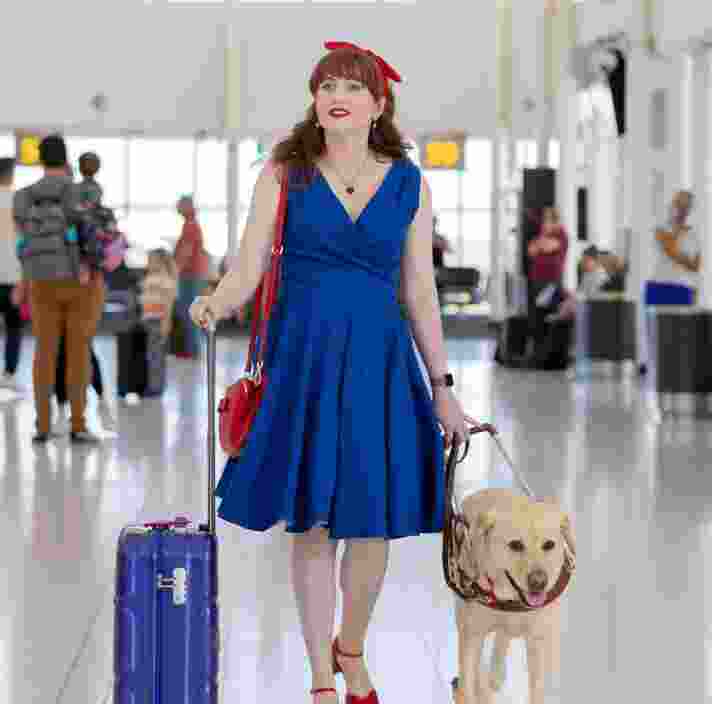
Dogs with jobs at Sydney Airport
Sydney Airport - Dogs with jobs.
We were so excited to have been chosen as the charity partner for Sydney Airport’s 2023 Christmas campaign.
Donation Dog collection boxes and QR codes on the digital screens were prominently displayed in the domestic and international terminals throughout December and January, making it easy for all passengers and visitors to show their support.
There were gift-wrapping stations, claw machines and even a fantastic Pup-up Café.
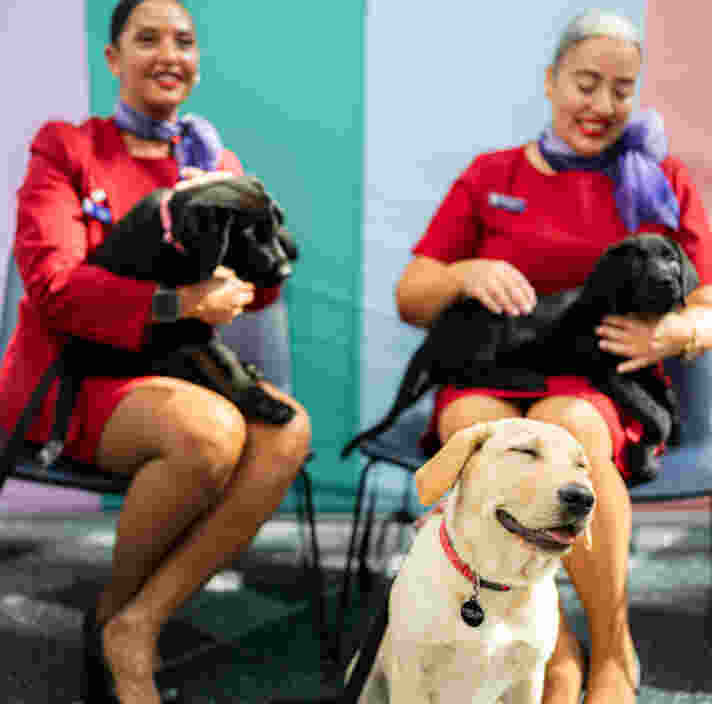
All donations are going towards the raising and training of five puppies, which have been given aviation-related names by the staff of the Sydney Airport Corporation. These pups are Aero, Pax, Kingsford, Syd and Amelia. Meet the pups who will go on to achieve big things.
Thank you Sydney Airport for selecting Guide Dogs NSW/ACT as your Christmas campaign partner for 2023!
In memory
Vale Joan Kennedy Styles
Joan Styles was a loyal Guide Dogs supporter of many years, who sadly passed away last year shortly before her 100th birthday.
As a young girl, Joan was affectionally known as “the girl with dogs”. She adored animals, particularly admiring a dog’s loyalty and love for their owners. Joan almost preferred furry four-legged companions over people!
Joan’s support for Guide Dogs was triggered by a simple yet impactful event: looking out of the window of her home in Pearce. On the street below, she noticed a person with a Guide Dog waiting at the bus stop. It immediately struck Joan how challenging it must be to navigate the community with low vision or blindness. Shortly afterwards, Joan felt inspired to contact Guide Dogs and make a significant donation.
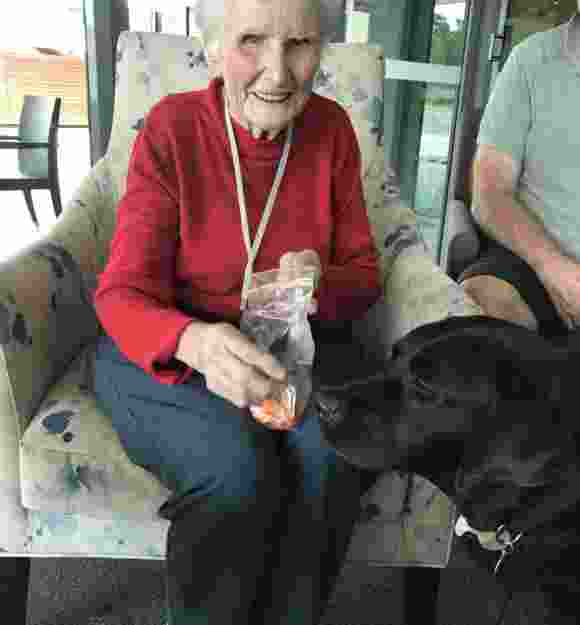
Years later, Joan moved into a nursing home where she was visited regularly by her son, Harry, himself a Guide Dogs supporter. Harry kept Joan up to date with all the latest news, even helping arrange for an Ambassador Dog from the Canberra office to drop by and meet Joan, bringing her untold joy.
During her later years, Joan began to lose her vision. She made the decision to include a gift in her Will to Guide Dogs which would help provide funding to breed, raise and train future Guide Dogs.
Joan’s legacy lives on through little puppy ‘Kennedy’, born November 2023. Kennedy is now happily settled with her puppy raisers, where the foundation training required to become a life-changing Guide Dog is well under way!
Did you know if you have included a gift of $50,000 or more in your Will to Guide Dogs, you can request to name a puppy in your memory?
Please contact Ali Kershaw on 0400 148 038 or email akershaw@guidedogs.com.au for more information.
Eye Health
Spotlight on cataracts
What are cataracts?
The term cataract refers to a progressive clouding of the normally transparent crystalline lens inside the eye.
The role of the lens is to focus light entering the eye on the retina, resulting in a clear image of what it is that the eye is looking at. When the transparency of this lens is reduced by cataracts, light entering the eye is scattered or becomes reduced, resulting in a reduction in vision clarity.
In addition to blurry vision, other early symptoms of a cataract may include an increased sensitivity to glare and a reduction in the vibrancy of colours or ‘yellowing’ of the vision. Over time, as the cataract develops, symptoms such as double vision, image distortion, difficulty driving at night and reading difficulties can occur.
Cataracts are difficult to see in the early stages and require examination by an eye professional with specialised equipment to diagnose them. As they progress, the pupil (the dark central part of the eye) may start to appear cloudy or grey, and in advanced stages of the disease this pupil area may become yellow or white.
In the mature stages, the impact of the cataract on vision is severe and may limit vision so significantly that the sufferer can distinguish the presence of light, but be unable to discern any additional detail.
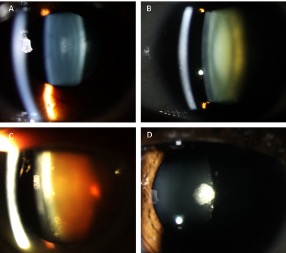
There are several different types of cataracts and examples of some of these are shown in the figure below.
How common are cataracts and what can be done to treat it?
In rare occasions, babies may be born with a cataract (congenital cataract) or develop one following trauma to the eye. But most cataracts are age-related so it is no surprise that the incidence increases significantly over time. One study found an incidence of 3.9 percent among the age group 55 to 64 years, but this increased to 92.6 percent among those 80 years and older.
Cataracts can be treated with a relatively straight-forward surgical procedure performed by an ophthalmologist. In this procedure, the cloudy lens is extracted and a new artificial lens is inserted in its place. Typically, vision is much clearer within a few hours of surgery, improving further as the eye heals. During this recovery time, prescribed eye drops must be used.
The figure on the right: Shows a small congenital cataract (A), a nuclear cataract (B), dense nuclear cataract (C) and posterior sub-capsular cataract (D). In images A-C you can see a beam of light to the left of the image.
Meet our newest Ambassador Dog
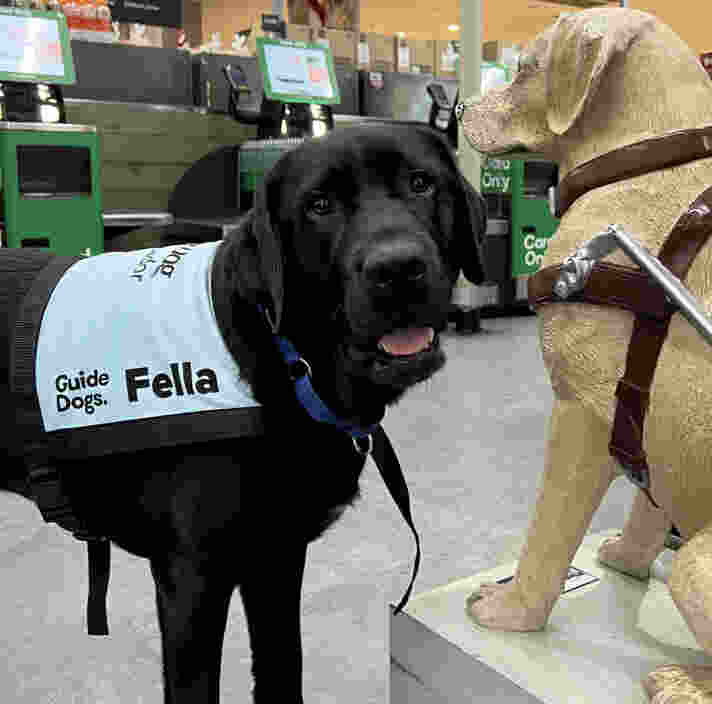
Our newest Ambassador Dog graduate – Fella
Hi, I’m Fella and I have a very important job as an Ambassador Dog for Guide Dogs. While I am new to being an ambassador after being a puppy, I am loving every minute that I get to be at events and interacting with all our donors.
When I am at events, I get to wear a special jacket that is blue and has my name across it. This jacket is unique to me. Do you know the other types of jackets pups can wear? Pups in training, for example, wear an orange jacket. These pups are learning to become Guide Dogs and cannot be patted when wearing this jacket.
I hope to see you at some upcoming events because without our supporters we would not be able to help people with low vision or blindness live a life without limits.
Gidget goes to school
Each year, Guide Dogs NSW/ACT breeds, raises and trains more than 200 dogs with the aim of becoming life-changing Guide Dogs for people living with low vision or blindness.
Some dogs, however, may choose a different career path, such as becoming a Therapy Dog. The Therapy Dog Program is a community-focused service that we have provided for more than 30 years. Therapy Dogs have an incredibly positive impact on people’s lives by providing emotional support, companionship and a calming influence on people who suffer from health conditions such as anxiety, autism, attention deficit hyperactivity disorder, social isolation, post-traumatic stress disorder and other disabilities.
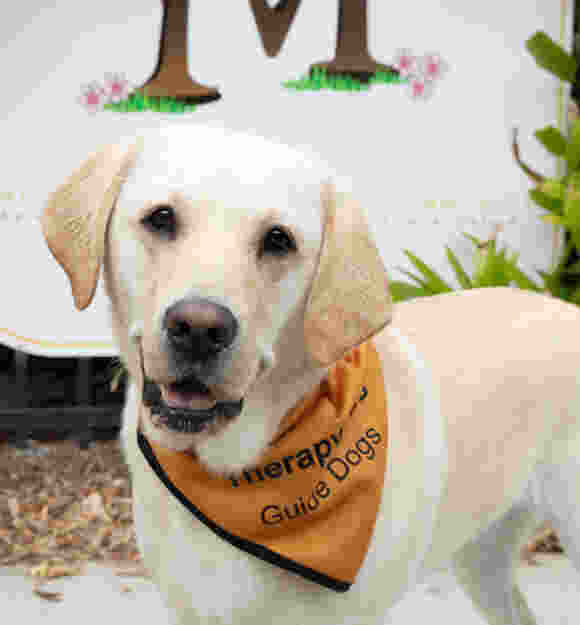
Gidget was born on 20 January 2021 and was sponsored as part of our Guide Dog Partner program. After two years of training, Gidget graduated as a Therapy Dog and was placed at a Montessori primary school in the Central Coast, where she now lives with a teacher and his family of four children.
Gidget was puppy raised in a big family with children and this has helped her to be comfortable in a school environment. Gidget’s family describe her as “playful, lovable, and extremely friendly. She’s feisty, brave and loves mealtime”.
Gidget has brought joy to more than 65 schoolchildren as a Therapy Dog. She helps greet children who have separation anxiety at school drop-off. Gidget also helps children to learn various responsibilities, such as walking, washing and grooming. Gidget brings out the smiles and love from the children each day when they see her at the school gate.
Thank you to the Lord Mayor’s Charitable Foundation and to Eldon and Anne Foote for sponsoring and supporting Gidget through the Guide Dog Partner program. With their generous support, Gidget has made a wonderful difference to the lives of many children and their teachers at Montessori.
“Gidget changes the energy of our school for the better and makes it feel more like a home.”
Recycling for a cause
Recycle and help Guide Dogs NSW/ACT at the same time
The NSW container deposit scheme, Return and Earn is the largest litter reduction scheme introduced in NSW.
Return and Earn began rolling out across NSW on 1 December 2017 in response to the Premier’s goal of reducing the volume of litter in the state by 40% by 2020. In 2020 there was a 52% reduction in the volume of eligible container litter in NSW, and over 300,000 tonnes of materials recycled.
To donate:
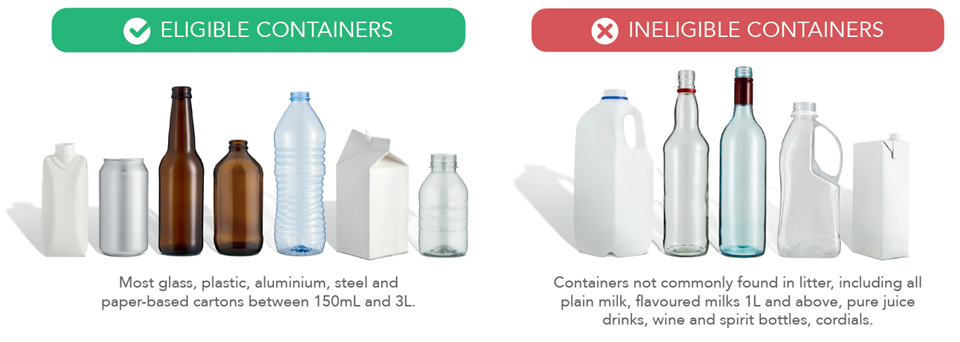
- Collect eligible containers. Look for the 10-cent mark to confirm eligibility.
- Find your nearest refund point by heading to https://returnandearn.org.au/map/ and typing in your postcode.
- Donate your refund to Guide Dogs New South Wales
a. Search for Guide Dogs New South Wales when donating at a collection point.
b. Download the free Return and Earn app and process your donation via the app.
You can recycle your eligible containers to one of over 600 return points across NSW and donate 10 cents per container to Guide Dogs NSW/ACT!
For more information about the Container Deposit Scheme, you can head to the Return and Earn Website or contact Guide Dogs NSW/ACT at info@guidedogs.com.au
Pip’s next adventure
Pip is off on her next adventure
In our last edition of Guide Dog Tales, we introduced you to a special puppy, Pip.
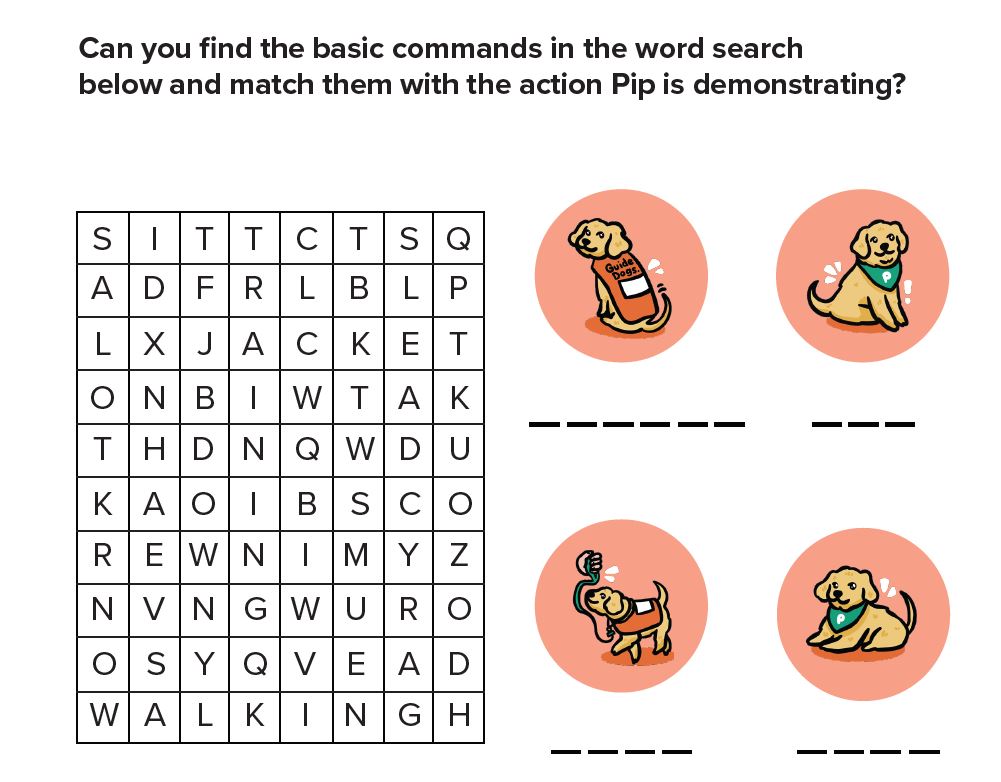
In each edition of Guide Dog Tales, we will have a special section to share Pip’s Puppy Tales with you. You’ll get to follow Pip’s adventures with an exciting story or activity for you or a family member to participate in!
Since leaving her mum and siblings, Pip has been living with a volunteer Puppy Raiser. She is learning new skills each day, including walking on a lead, learning basic commands and wearing her orange training jacket when she is out and about.
Pip will also go with her Puppy Raiser to regular group training sessions and meet with her Puppy Development Advisor to keep track of her progress.
Race to support independence and freedom
Teams from Guide Dogs recently raced to support people with low vision or blindness and had a great time in the process.
In collaboration with XL Events, Guide Dogs Australia has developed ‘Unleashed. Race to support Guide Dogs’.
While team building events are an effective way to build bonds and develop meaningful connections outside of the office, and many of the best events also support charities, Unleashed goes one step further.
This is more than a race of the fittest. It tests your ability to solve problems in new ways, employing senses other than sight.
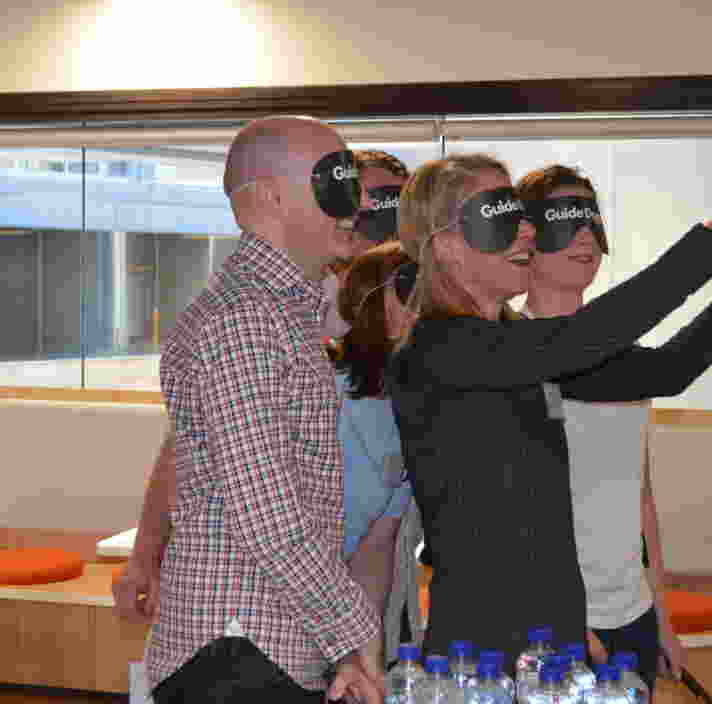
Teams are challenged to walk, for just a little while, in the shoes of someone with significant vision loss or blindness by tackling a series of exciting and enlightening challenges.
By the end, participants will have developed a deeper understanding of the critical importance of accessibility and inclusion.
Unleashed aims to educate and engage corporate Australia while assisting them to elevate team spirit and support the critical work done by Guide Dogs.
If you’re interested in strengthening team bonds, rewarding your team members, encouraging accessibility and inclusivity, and supporting people with low vision or blindness, consider booking Unleashed, Race to Support Guide Dogs by visiting xlevents.com.au for more information.
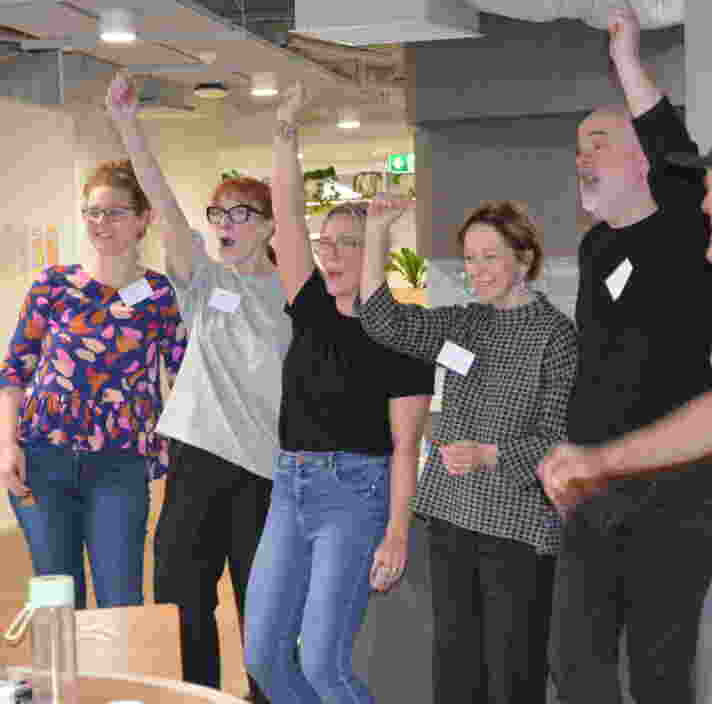
“I really enjoyed the event. I loved the inclusion of vision loss challenges and it was a great team bonding experience.” – Steve
Our Partners
Thank you to our partners:










Your donation is the difference!
Your donations to Guide Dogs NSW/ACT help us to continue our important work, including matching Guide Dogs and Therapy Dogs, Orientation and Mobility services, providing regional outreach, undertaking diagnostic services through our Centre for Eye Health, and delivering technology support sessions and Occupational Therapy to more than 3,500 Clients.
Ready to continue?
Seems like you have filled this form earlier. Let’s pick up where you left off.