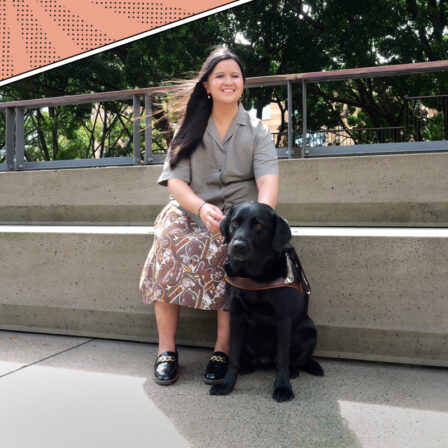
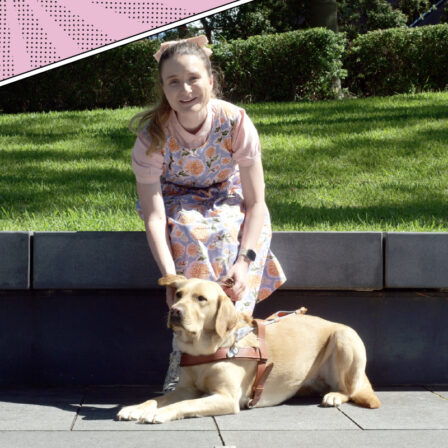
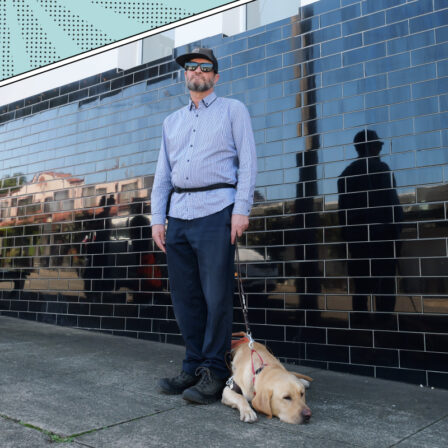
The bond between a Handler and their Guide Dog is like no other. Many Handlers describe their Guide Dog as an extension of themselves, and that connection doesn’t just vanish when their Guide Dog retires.
“I was lucky that I’m working, so I could afford to keep my Guide Dog, Pearce when he retired,” says James, a Client Connections Specialist and Guide Dog Handler. However, that’s not always the case for other Guide Dog Handlers. Being unable to afford to keep their retired Guide Dog is a reality that some people with low vision or blindness have to face, as they may not be able to work due to their vision condition, age or other circumstances. “You have double the food for your retired Guide Dog and current Guide Dog, and that’s also the time where they need more medical attention,” said James.
“Pearce had a rare condition and used to get fluid in his abdomen. Each vet bill was six to seven thousand dollars.” James had Pearce for nine and a half years before he retired and was fortunate enough to have the space and financial circumstances to keep him, pay for the extra food he needed and medical bills.
To give up a retired Guide Dog “would be like giving away a child,” says James. “I couldn’t do that.” Allowing a retired Guide Dog to stay with their Handler is the best thing they can do for their life-changing companion who has opened up their world and helped them to lead independent lives.
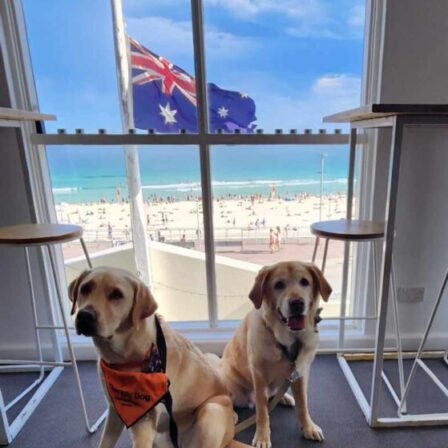
“Keeping your retired Guide Dog is not only beneficial for the mental health of the Handler, but for the dog as well. When I kept my retired Guide Dog, Pearce, he had a year together with my current Guide Dog, Quake. Quake followed Pearce everywhere and they would even sleep together,” says James.