
On this page:
A history of Guide Dogs.
Leading the way for over 65 years.
Welcome to the holiday edition of the Guide Dogs magazine. We are proud to highlight the many ways Guide Dogs NSW/ACT is championing the rights of people with low vision or blindness throughout these pages.
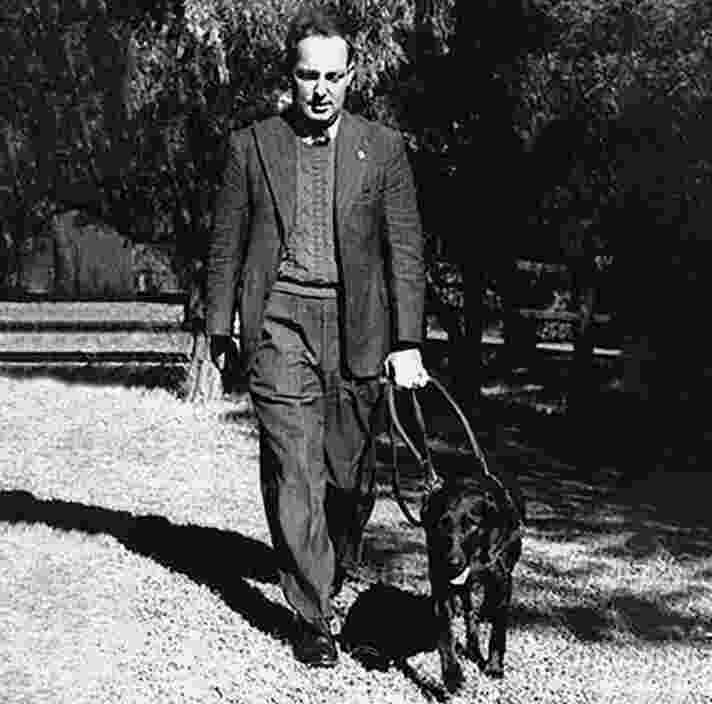
The Guide Dogs story begins in 1950, when Dr. Arnold Cook arrived in Australia with the country’s first Guide Dog. Arnold lost his sight at 18 years old and became familiar with Guide Dogs after travelling to England to study. While he was overseas, he trained at Britain’s Guide Dog Association and was matched with his first Guide Dog, Dreena.
When Arnold returned to Australia with Dreena, other Australians with low vision or blindness were eager to partner with a Guide Dog. One year later, the first Guide Dog Association was formed in Perth and by 1975, there were Guide Dog Associations in each state and territory.
Fast forward to today, we’ve had some amazing achievements. We’ve expanded our projects to help people with low vision or blindness to create and achieve their goals. Some of the ways we do this include raising, training and matching Guide Dogs and Therapy Dogs with their Handlers. We also work with Clients to develop their skills through our Orientation and Mobility and Assistive Technology Services, and continue to support regional and remote Clients throughout NSW and the ACT.
However, the best is yet to come! In 2027, Guide Dogs NSW/ACT will be celebrating 70 years of creating opportunities and championing the rights of people with low vision or blindness. We’re excited about what the future holds.
A gift even Santa can’t top.
Help kids with low vision or blindness like Sora shine.
The incredible power that Guide Dogs has to make a difference to the lives of children with low vision or blindness is celebrated more so during the holiday season. For many, Christmas is a time for generosity, joy, and gathering with loved ones. It is also a time to think about the kinds of gifts that truly matter.
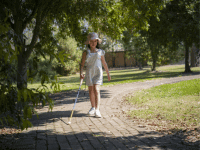
Let us introduce you to Sora; a bubbly, kind and outgoing eight-year-old girl. She sings wherever she goes (she’s a huge Taylor Swift fan) and isn’t afraid to speak her mind. She really is a remarkable little girl.
At just five months old, Sora was diagnosed with a rare genetic condition called Leber Congenital Amaurosis. It means she can see shadows and some shapes, but struggles to discern detail and doesn’t always pick up on body language or social cues.
Her mum, Kanae, explains, “Sora is like any other child her age, but people often underestimate her because of her vision. She doesn’t like being told what she can’t do. She just wants to join in, be independent, and live life like her friends.”
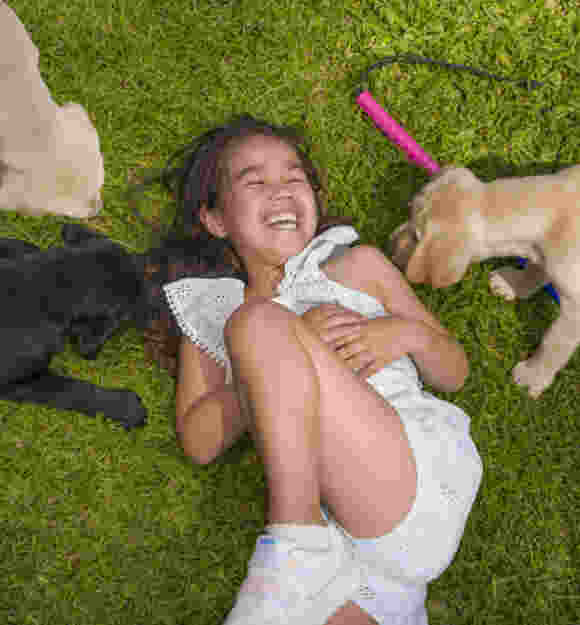
Sora’s dreams are just like those of any other little girl. She wants to sing, play, and one day perform on stage. But for Sora, there’s one dream that tops them all: being matched with her very own Guide Dog when she’s older.
At school and on the playground, Sora works hard to keep up with her friends. However, running games are difficult when you can’t clearly see what’s happening around you and drawing and reading can be frustrating.
It’s even more challenging for Sora to navigate social interactions. When other children use body language or subtle cues, Sora can miss them, resulting in her feeling left out or misunderstood. Although step by-step, Sora is learning how to overcome these obstacles. However, there are still everyday situations where she needs specialist support to thrive. That’s where you can make a huge difference.
A gift of $150 could help a child like Sora join a holiday program, where they’d learn new skills and have a chance to form lasting friendships with children who understand their experiences.
"Without Guide Dogs, Sora wouldn’t have the independence she does today. I can’t thank donors enough for making this possible."
Sora dreams of one day walking beside her own Guide Dog.
Sora has been working with one of our Orientation and Mobility Specialists, Nicola, since she was a baby, which has been life-changing for her and her family. After eight years of working with Nicola, Sora now has the skills she needs to navigate her world, from learning to use her white cane to walk safely in new environments, and identifying objects and her surroundings using her other senses.
In this short amount of time, she’s mastered cane techniques on steps, escalators and uneven terrain, learned to respond to sounds and tactile cues in her environment, and even begun to understand road safety and navigating busy shopping centres. Each skill builds her confidence and brings her more independence.
Living with blindness or low vision should never dim a child’s dreams. So, this holiday season, give a gift even Santa can’t top. Just $52 can provide a white cane to a child like Sora that’ll allow them to explore their world safely and independently.
For Sora’s mum, Kanae, the impact has been life-changing too. “Nicola has been there since day one. She hasn’t just worked with Sora, she’s also taught me how I can help her every day. I’m so grateful for the generosity that makes this support possible.”
The services and care Sora receives from Guide Dogs will last a lifetime. With support from our generous donors, she’ll grow up into a confident and capable young woman, ready to take on the world.
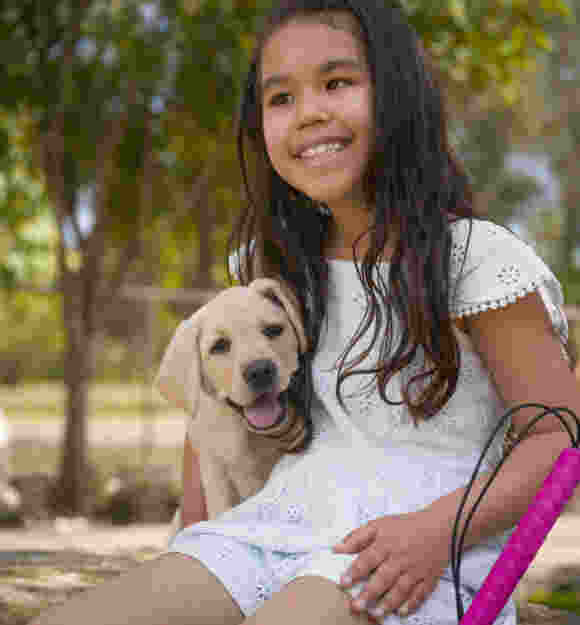
When you ask Sora what she wants to be when she grows up, her answer is simple, “an actress or a singer!” She dreams of standing on stage, microphone in hand, and performing for a crowd!
But above all, Sora dreams of one day walking beside her own Guide Dog. Every Orientation and Mobility session, every piece of equipment she receives, and every hour of support brings her one step closer to that future.
“Without Guide Dogs, Sora wouldn’t have the independence she does today. Nicola has given us so much, not only practical skills but also emotional support. I can’t thank donors enough for making this possible,” says Sora’s mum, Kanae.
As the year ends, your generosity can open new beginnings. Give the gift of independence to help children like Sora take their next step toward a brighter future and receive your free Christmas ornament.
Give a gift that keeps on giving and giving and giving.
-
A festive bundle of food, toys, and training treats for Guide Dogs in training.
-
Support a child with low vision or blindness to move safely and independently.
-
Give a newly placed Therapy Dog everything they need to start their journey strong.
-
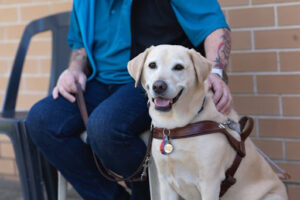
A specialised harness which allows our Clients to be safely guided by our Guide Dogs.
A message from our CEO.
Happy festive season from all of us at Guide Dogs!
As the year comes to a close, it is important to take time to reflect on our past achievements and acknowledge our incredible progress. We’ve made remarkable strides toward building a more inclusive and accessible world. None of it would be possible without your kindness and commitment.
Many of you know us for our life-changing Guide Dogs, who provide independence and companionship for people with low vision or blindness. However, we also offer a wide range of services and Client programs that support people with low vision or blindness of all ages to increase their independence, gain confidence and live the life they choose. You can support our programs to help children like Sora take their next steps towards independence this holiday season and throughout the rest of their lives.
This year, we’ve increased our advocacy efforts to break barriers, raise awareness, and connect with the community to advocate for positive change. This has led to some great initiatives, including efforts to improve accessibility in the hospitality industry and the growth of our Inclusion Ally community.
I am also proud to note that Guide Dogs was awarded ‘Highly Commended’ in the Charity Brand category for the 2025 Reader’s Digest Annual Trusted Brand Awards, once again recognising us as one of Australia’s most trusted charity brands.
In May 2025, we launched SeeWay, a fabulous new initiative for individuals with moderate low vision who may not qualify for funding but urgently need support to manage everyday life independently. SeeWay is aimed at individuals who may fall between the gaps in existing programs, and it focuses on providing practical and emotional support to help them navigate their low vision journey.
In 2027, we will be celebrating 70 years of Guide Dogs! We couldn’t achieve all our vital work without the support of our incredible donors, volunteers, and Inclusion Allies. Your generosity is crucial to enable us to empower people with low vision or blindness to navigate their communities safely and independently.
On behalf of everyone at Guide Dogs NSW/ACT, we are excited for the new year and the opportunities it will bring to support more people with low vision or blindness.
Warmest regards,
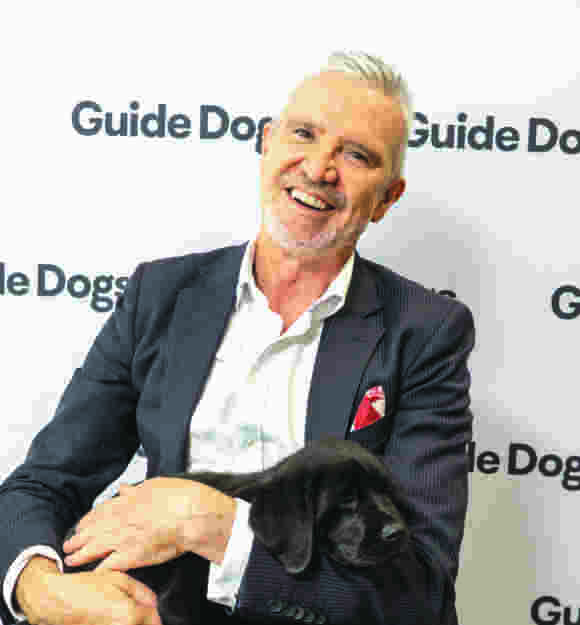
Dale Cleaver
Chief Executive Officer
Guide Dogs NSW/ACT
Assistive Technology for people with low vision or blindness.
Including recommendations and advice.
At Guide Dogs NSW/ACT, we’re more than dogs. Another vital support we offer is our Assistive Technology Service. Assistive Technology empowers people with low vision or blindness to live independently, stay connected, and access the world around them.
It includes any tool, device, or software designed to support everyday tasks and goals, including reading the newspaper, accessing your phone, and doing the shopping. Technology can also assist with navigating your community, as GPS apps can tell you what’s around and help you get where you need to go.
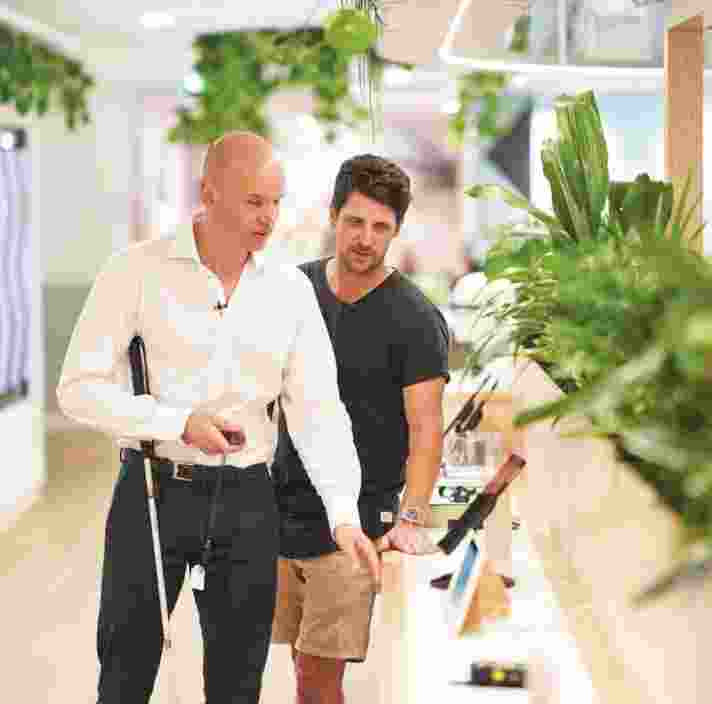
Emerging Technology and Accessibility Manager, Ben Moxey, is responsible for enhancing the accessibility of Guide Dogs NSW/ACT and its services. “After all, it doesn’t matter if someone who is blind can use a computer if the content they want to access with their screen reader doesn’t work,” Ben says. “I also keep tabs on technological innovations that might be useful for people with low vision or blindness so we can influence design and perhaps use the products in service delivery.”
Testing Assistive Technology is a big part of Ben’s job. Being totally blind, Ben knew that mastering Assistive Technology would be key to his independence because he needs to be able to use computers like everyone else. He now also helps other people with low vision or blindness do the same by providing support, reviews, and resources for Clients and Guide Dogs NSW/ACT staff. “Assisting someone else with their independence is the best part of my role,” he said.
Some of Ben’s recommendations include:
- Screen readers, like JAWS or NVDA, which convert on-screen text into speech.
- Screen magnifiers, such as ZoomText, which enlarge and enhance screen content.
- Smartphones with built-in features like magnifiers, text-to-speech, and voice assistants.
- Braille displays and notetakers, which allow people to read and write using Braille.
Learn more about our Assistive Technology Services and Assistive Technology Help Desk, or call 1800 484 333.
Our Therapy Dogs.
Read more about our life-changing dogs.
Did you know, we don’t just raise and train Guide Dogs to assist people with low vision or blindness to navigate their communities safely and independently? We provide Therapy Dogs for individuals and facilities too!
The primary role of a Therapy Dog is to provide companionship and emotional support to individuals in and around their homes and communities. On a broader scale, Therapy Dogs can also be present in facilities like emergency and frontline services, healthcare clinics, schools, aged care facilities and nursing homes, courts and tribunals, psychology and counselling practices and rehabilitation clinics.
We offer Therapy Dogs for three different types of facilities:
Wellbeing Dogs.
Wellbeing Dogs provide emotional support to frontline workers in high stress environments like emergency services, healthcare clinics and psychology practices. These dogs can also provide comfort to people living in aged care facilities and nursing homes.
School Support Dogs.
School Support Dogs enhance the wellbeing and emotional stability of students and teachers in learning environments.
Court Dogs.
Court Dogs provide comfort and emotional support to court staff and individuals in settings like court rooms, remote witness rooms, jury selection and interview rooms.
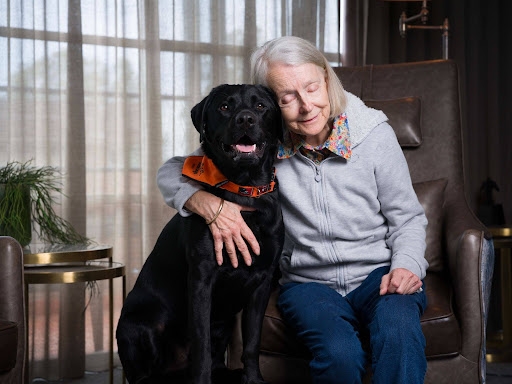
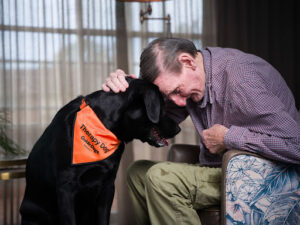
Meet John and Therapy Dog, Harper.
“I am an elderly, married man in good health. I have low vision as a result of Glaucoma, but my vision is sufficiently adequate that I have not required the services of a Guide Dog.
However, in 2019, I became the lucky recipient of a Therapy Dog, named Harper. Living on a farm, I have always been around working dogs and companion dogs, but never did I expect to feel the overwhelming companionship and love I received from Harper, my Therapy Dog. She is so intuitive of my feelings and seems to know when I need the presence of her company before I even do.
She gives me a reason and stimulus to get out of bed in the morning. I enjoy the responsibility and purpose it gives me to get up and feed her and take her for a walk.”
– John, Harper’s Handler.
To learn more about our Therapy Dog Program for individuals and facilities and to express your interest, call our Therapy Dogs team on 1800 436 364.
Donation Dogs: make change matter.
Love your local dog.
There’s something special about dropping some coins into a Guide Dogs Donation Dog.
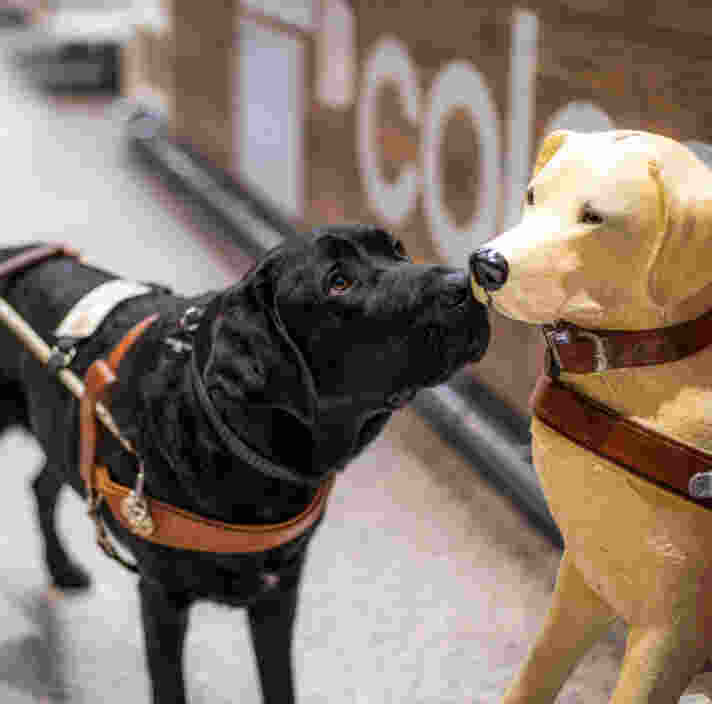
That familiar clink of change, the gentle smile it brings, and the feeling of doing something good – it’s a simple moment that has connected generations of Australians. For more than 50 years, our iconic Donation Dogs have stood faithfully in shopping centres, supermarkets, and local stores across NSW and the ACT. They’ve been a part of childhood memories, family errands, and community life, a constant reminder that kindness can be as easy as sharing your spare change.
Many people still remember the first time they met a Donation Dog as a child – eyes wide with curiosity, reaching up to drop a coin inside. Some of those same children are now parents or grandparents, introducing the next generation to that same small act of giving. It’s a timeless tradition, passed from one caring hand to another. But behind every dog is a much bigger story. Every coin dropped helps people with low vision or blindness live the life they choose. Funding essential services like Orientation and Mobility training, white cane skills, and of course, the training of life-changing Guide Dogs.
Here are some of the services that your local Donation Dog can fund:
- Orientation and Mobility Services: everyday travel skills to keep adults and children with low vision or blindness moving with confidence!
- Guide Dog Mobility: supporting people with low vision or blindness to partner with a Guide Dog to access the community.
- Occupational Therapy: practical skills for everyday living, regardless of age or level of functional vision.
- Assistive Technology Service: supporting people with low vision or blindness to use hearing and touch to continue accessing print and electronic information from the world around them.
Help us fund the breeding, raising and training of Guide Dogs by loving your local dog and donating today. For more information about the program or to find your nearest Donation Dog call our friendly team on 1800 436 364.
Lessons, Labradors and lots of love.
20 years of puppy raising.
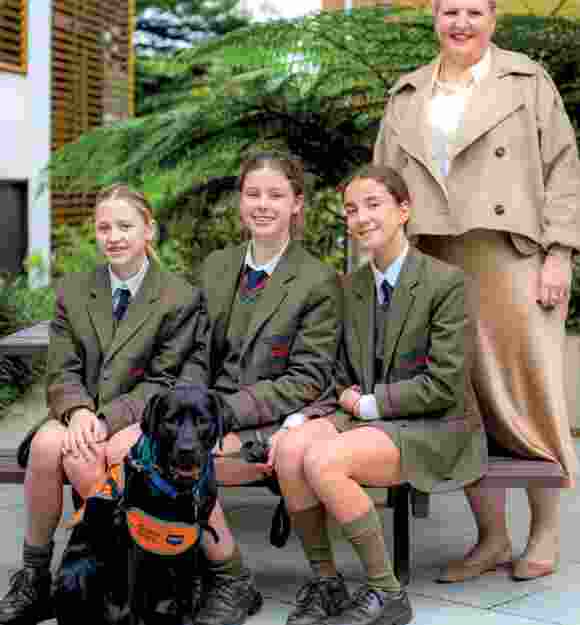
Allysia never imagined that a simple question from a student would change her life. While working at a boarding school on Sydney’s North Shore in 2005, a student researching for a project about Guide Dogs NSW/ACT came across puppy raising and asked, “why can’t we do this here?”
Allysia’s school became the second in NSW to have a dog on campus, well before the therapeutic benefits of dogs in schools were widely recognised.
Now, 18 life-changing Labrador pups later, Allysia is Head of Boarding at Ascham School in Edgecliff, Sydney. She cares for 125 boarders, most of them being girls from regional NSW, and lives on campus with her husband and daughter. Puppy raising is not just a solo effort; it’s a family affair and a school-wide initiative. Although the pup lives with Allysia’s family and joins her on weekends and holidays, they’re first and foremost part of the school and boarding house community.
Being a Puppy Raiser for Guide Dogs NSW/ACT is a volunteer role that involves caring for a Guide Dog puppy in your home from eight weeks to around 14 months old. It’s all about giving the Labrador pup the best possible start in a loving home, socialising them in different environments, and helping them learn basic training.
One of the things Allysia values the most about puppy raising is the ongoing support she receives from Guide Dogs NSW/ACT whenever she has a question or needs help with a puppy. “You get so much support from your Puppy Development Advisor, from the Guide Dogs team, and from the network that you create, which makes it easy to bring a dog into your home and love them,” she says.
For anyone considering volunteering to become a Puppy Raiser, Allysia says, “I would say, don’t hesitate. Get your family on board, whatever that looks like, and get others involved too, because it’s not a solo project. You will be supported through each step.”
Interested in volunteering to become a Puppy Raiser for Guide Dogs NSW/ACT? Visit our website to sign up as a Puppy Raiser.
"If all we have to do to help someone gain mobility and independence is to love a dog in this environment and expose them to lots of people, then that's a pretty easy thing for us to do, and an amazing experience for our boarders to be a part of."
Losing some vision doesn’t mean a loss of connection.
SeeWay: a Guide Dogs initiative.
When your vision changes, it’s often the little things that shift first. The shimmer of text on a screen, a friendly wave you almost miss, or the way light pools across a familiar room.
These moments can feel different and disorienting, but with the right support and adjustment, you can stay connected to what matters most; the people, places and moments that make life feel like yours.
SeeWay is your link to what matters most.
An initiative of Guide Dogs, SeeWay is a free national support service for people living with moderate low vision and their families, friends and carers.
SeeWay combines mental wellbeing support, digital skills training, and practical information designed specifically for people with low vision. It’s about helping you stay connected to the things and people that matter most, whether that’s keeping in touch online, making simple adjustments around the home, or simply
knowing you’re not alone.
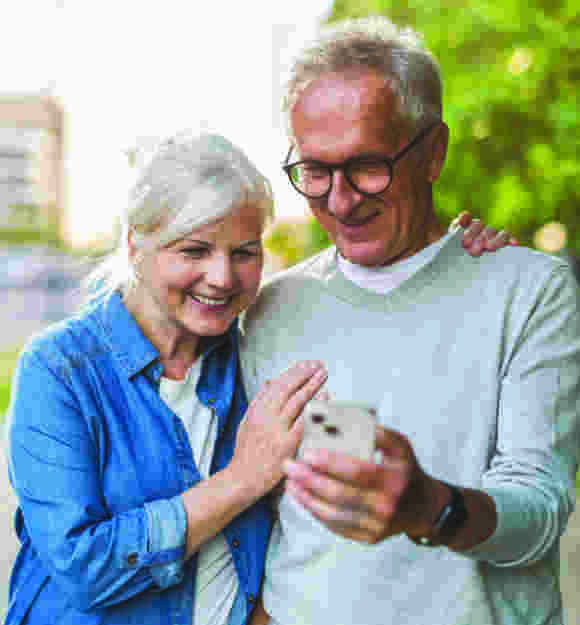
SeeWay allows you to:
- Learn how to use your phone or tablet to be more accessible with low vision.
- Hear from others who’ve walked a similar path and read or listen to tips to make daily life easier, and how to receive further support.
- Access bulk-billed mental wellbeing support (with a GP referral).
Whether your vision has changed from a condition such as macular degeneration, glaucoma or diabetic eye disease, or you’re supporting someone with low vision, SeeWay is here to provide holistic lifestyle support to complement the care of your eyecare professional.
SeeWay helps people with low vision stay connected, and informed, with free practical lifestyle and emotional support.
Visit seeway.com.au or call 02 8350 1400 to discover free, practical and emotional support today.
How your Will can change lives, one puppy at a time.
A legacy of loyalty.
Imagine leaving behind a legacy so a puppy can grow into a life-changing companion for someone who is blind or has low vision. Through a gift in your Will to Guide Dogs, you can do just that by ensuring your values live on in the form of independence, mobility, and unconditional love.
Barbara’s legacy: Babs begins her journey.
Earlier this year, a very special Guide Dog named Babs graduated. She was then matched with her new Handler, ready to begin a life of independence and companionship. Babs was named in loving memory of Barbara Hunter, fondly known as “Babs” to her family and friends. Barbara’s brother Geoff, a Guide Dogs supporter for over a decade, had the honour of naming the puppy. Geoff encouraged Barbara to leave a gift in her Will to Guide Dogs, a gesture that now lives on through Guide Dog, Babs and the life she’s transforming.
The Hunter family’s support runs deep. Geoff has also made the incredible commitment to leave a gift in his own Will, ensuring the family’s legacy of compassion continues for generations to come.
Thanks to supporters like Geoff and Barbara, more Australians living with blindness or low vision will experience the freedom and confidence that only a Guide Dog can bring.
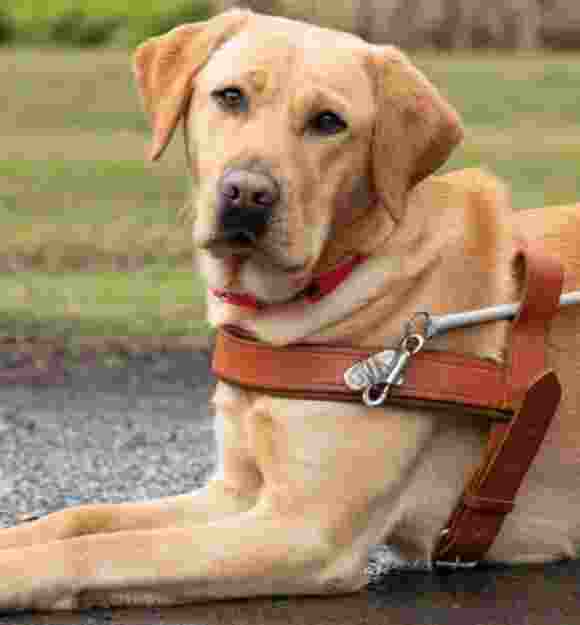
Did you know, if you have included a gift of $50,000 or more in your Will to Guide Dogs NSW/ACT, you can request to name a puppy in your memory?
The power of a gift in your Will.
Leaving a bequest to Guide Dogs is more than a financial gesture, it ensures people with low vision or blindness can live the life they choose. Whether large or small, your gift helps fund the breeding, raising and training of our extraordinary dogs.
Guide Dogs offers a heartfelt opportunity for bequest donors: the chance to name a puppy and follow their journey. Your family will receive a birth certificate, progress updates, and photos as your named puppy develops.
It’s a deeply personal way for your loved ones to witness your legacy in motion, tail wags and all.
How to leave a gift.
Including Guide Dogs in your Will is simple. You can choose to leave a percentage of your estate, a residual gift, or a specific amount. The team at Guide Dogs can provide sample wording and support to make the process seamless.
You cannot know what it means to hear news of dear little Bill. Such a delightful reminder of my beloved brother and a warm feeling that his spirit lives on
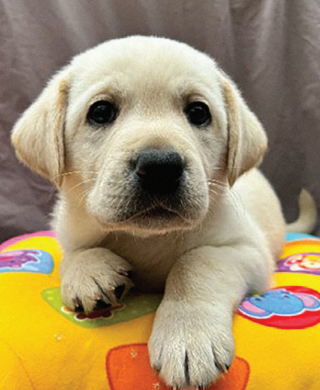
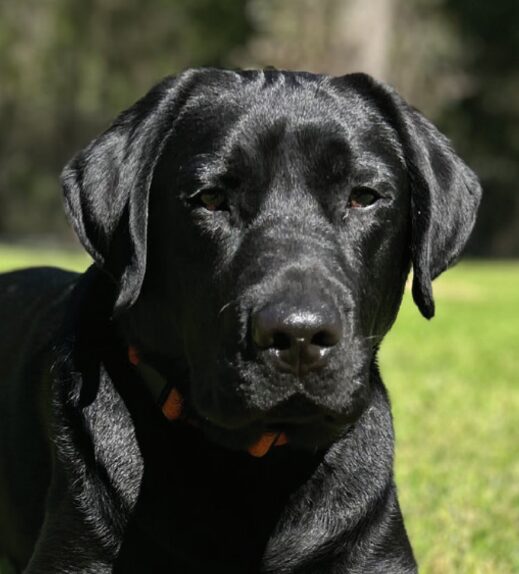
I love hearing about Bev’s little legacy and am glad that Bounty is doing well. Sounds like he loves nature just like Bev did.
How we’re creating a community that everyone can access.
Breaking barriers through advocacy and education.
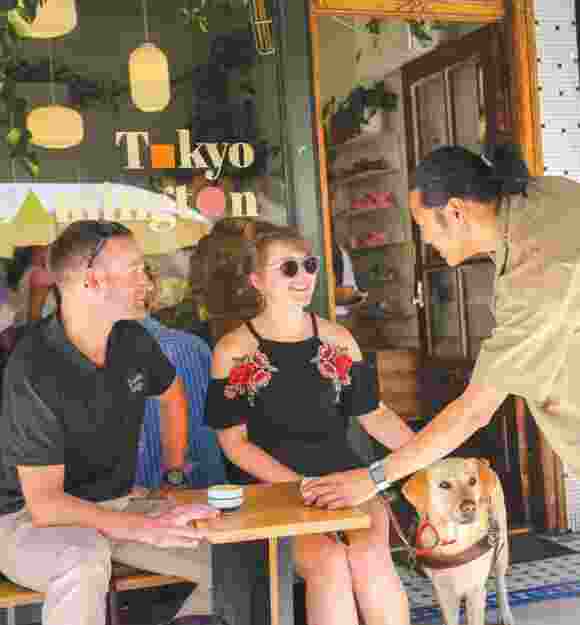
Dining out is more than enjoying a meal. It’s a way to connect, celebrate, and belong. However, our research shows that only one in three people with low vision or blindness feel confident accessing their community, including cafés and restaurants.
Despite years of advocacy and growing awareness, many hospitality businesses and staff still lack the tools and training to provide truly inclusive services.
Earlier this year, we ran the, “Access means business” campaign with the City of Sydney to educate the hospitality industry about the rights of Guide Dog Handlers to access all public areas, and how to make cafés and restaurants more accessible for people with low vision or blindness.
For Dan Searle, a Community Mobiliser with Guide Dogs NSW/ACT and a Guide Dog Handler, this campaign was personal.
Part of Dan’s regular routine is visiting his local cafe. As one of only a few Guide Dog Handlers in Albury, Dan is well-known and welcomed. “You tend to form a relationship with the business owners because they’re smaller businesses in a smaller community. So, I find they are inclusive and treat me with respect,” he says.
However, it’s not always easy for Guide Dog Handlers like Dan to visit cafés or restaurants. Unfortunately, some Handlers still encounter refusals and access issues, despite it being illegal.
“In my experience, most people want to do the right thing,” Dan says. “They want to be more accessible and inclusive. But they don’t always know what the right thing is, so it’s nice to offer them some practical tips.”
Dan explains that accessibility doesn’t have to involve costly renovations. Simple changes including training staff, understanding access laws, and providing accessible menus can make a big difference. We offer resources and training to help hospitality businesses become more inclusive and confident in welcoming all customers.
Join us to create a more inclusive society.
We’re looking for people like you to help spread the word and stand with us, as we work to reduce the barriers that prevent people with low vision or blindness from living the life they choose.
Dan says, “If people have specific skills, knowledge, or a particular area they want to advocate for, we’d love to hear from them. The more people who can sign up and help us spread the word, the better and easier it is to get our message across.”
Visit our website to sign up as an Inclusion Ally. You’ll receive updates on our advocacy campaigns and learn how you can volunteer your voice or your time to make a real difference. We can’t create positive change without your help!
Ready to continue?
Seems like you have filled this form earlier. Let’s pick up where you left off.