Foothpaths in Focus
Why Inclusive Pathways Matter
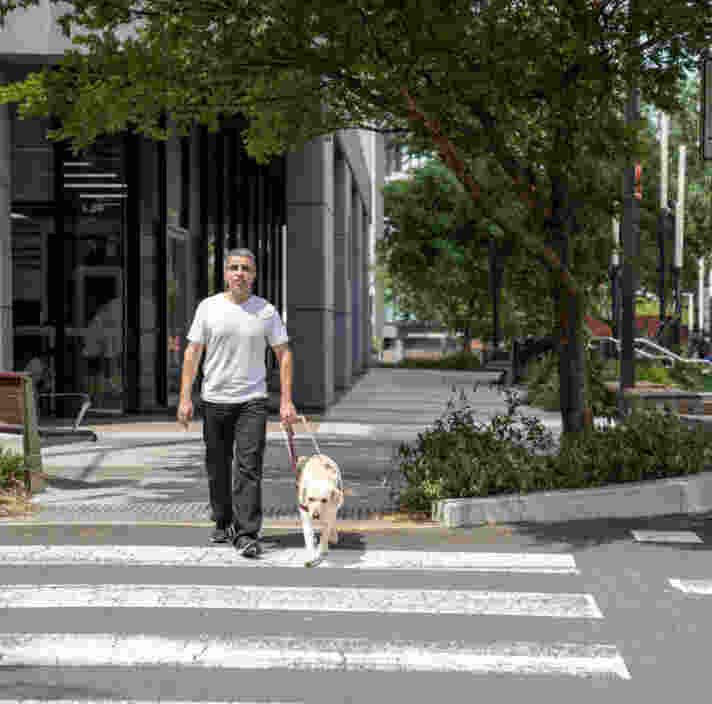
Pathways connect our community together; providing access to essential services, employment and social participation. When our pathways are accessible, it ensures every person can move independently and safely through their community and live the life they choose. Inclusive pathway design and regulation does more than support someone to get from A to B. They support participation in everday life, strengthen the local economy and facilitate a stronger sense of belonging.
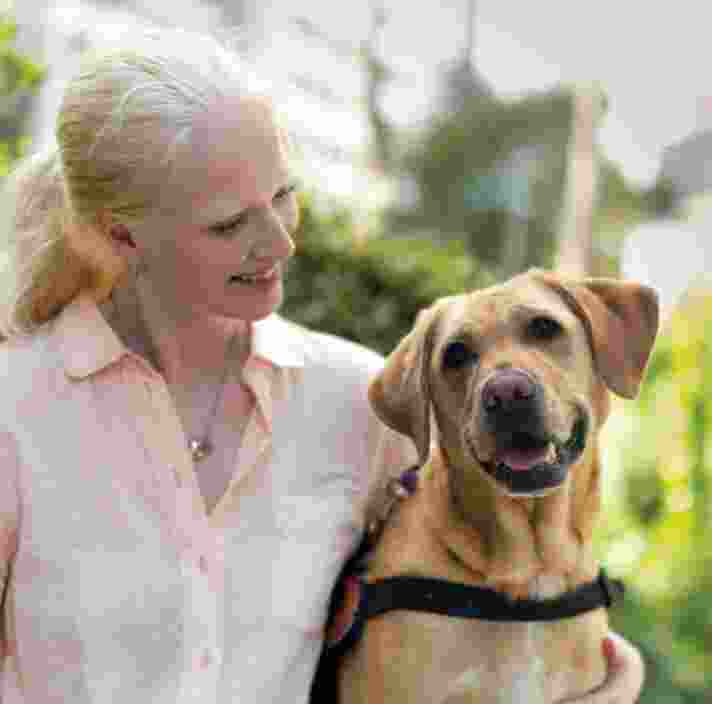
‘As a person with low vision, navigating pathways that are cluttered, poorly maintained and not built with tactile and clear visual separation in mind requires significant cognitive effort and constant vigilance, which can be both exhausting and discouraging. Access to inclusive pathways enables me greater independence, increased confidence and willingness to engage meaningfully in community life, ultimately enhancing my quality of life” – Sacha, Guide Dog Handler.’
Our Pathways to Inclusion 2025 research report.
In 2025, Guide Dogs NSW/ACT commissioned the University of Technology to conduct research into the experience of people with low vision or blindness navigating pathways. The report from this research provides an evidence base for action by governments, community advocates, and people with low vision or blindness who are committed to making society more accessible.
With more than 308 survey responses from across metropolitan and regional NSW and the ACT, findings show that access remains inconsistent and, in many places, is getting harder.
- Only 46 percent of respondents rated their community as accessible.
- 42 percent felt less confident getting around their community now than two years ago.
- Average confidence navigating local areas was 6.3 out of 10, pointing to unreliable access rather than isolated problem spots.
Read the full and summary reports linked below:
What does the law say about ensuring inclusive pathways?
- The Disability Discrimination Act 1992 makes it unlawful to treat people with a disability less favourably than a person without a disability. In the context of pathway accessibility, it requires environments and processes to be inclusive, accessible, and free of discriminatory barriers.
- The Disability Inclusion Act 2014 (NSW) commits the NSW Government to making communities more inclusive and accessible for people with disability now and into the future. It regulates disability supports and services to people with disability in NSW. It requires local governments to develop Disability Inclusion Action Plans and review them every four years.
- The Disability Inclusion Act 2023 (ACT) requires territory authorities (which includes local government functions) to prepare a Disability and Inclusion Plan (DIP).
What needs to happen now?
Our research findings are clear; we need to act to ensure pathways are accessible. We advocate that:
Government:
- Better regulate and enforce the use of pathways to improve the safety and confidence of pedestrians.
- Include and invite people with low vision or blindness to participate in Accessibility and Disability Reference Groups at the local and state level.
Organisations:
- Ensure paths of travel within, to and around your business are clear and accessible.
- Consult with people with disability on organisational policy and procedures relating to accessible design.
Community:
- Identify and report community access barriers that impact people with low vision or blindness.
- Contribute to community surveys and consultations to ensure the issues that impact people with low vision or blindness are captured.
Contact the Social Change team on socialchange@guidedogs.com.au, or via the form below, to learn more about our Inclusive Pathways advocacy work.
Join our Social Change Community.
Become more involved in our broader advocacy work.
Ready to continue?
Seems like you have filled this form earlier. Let’s pick up where you left off.