Guide Dog retirement is bittersweet
Retiring your first Guide Dog is always difficult, and for Ria, the bond she shared with her first Guide Dog, Max, was unmatched. However, moving on from one beloved companion and aid to another is inevitable, and Ria has now found joy in working with her second Guide Dog, Trinity.
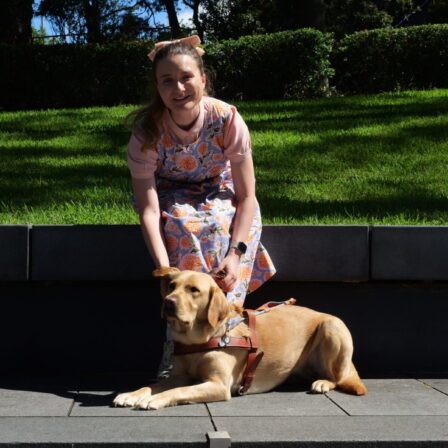
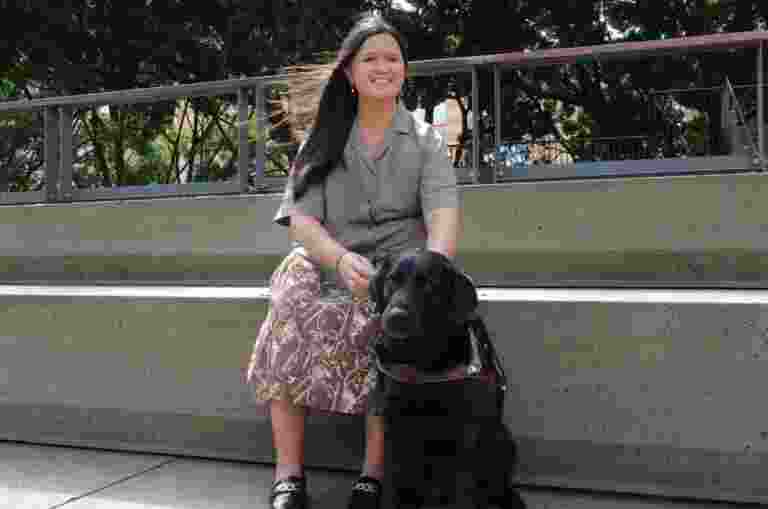
When it was time to be matched with her second Guide Dog, Ria had a few criteria, including wanting another male dog like Max. Although, when she received a call from her Guide Dog Mobility Instructor, she wasn’t expecting him to tell her that he had the perfect dog for her, and she was a female. Ria and black Guide Dog, Trinity, went for a test walk that made Ria, “feel the potential Trinity had.”
“Trinity had big paws to fill, and she filled them well,” said Ria. Now, Ria and Trinity walk around her community and to and from work from the Blue Mountains to the city on the train, and the pair have formed an incredible connection.
A challenging shift from cane to Guide Dog
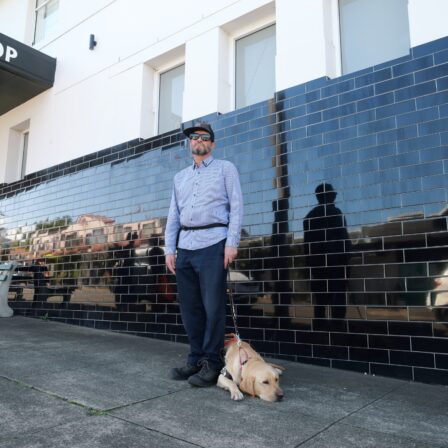
Transitioning from one Guide Dog to another takes hard work and training, however, it is nothing compared to moving from a long cane to a Guide Dog for the first time. “I was a cane user and basically it was like losing a part of your arm and gaining an extra four legs,” says Ria. “When you walk with a Guide Dog, you don’t get that direct contact with the ground like you would with your cane. But you also have to put your trust in another being.”
It took a while for Ria to develop that trust with her first Guide Dog, Max, and then build it up again with Trinity. Getting to know each dog’s rhythm, cadence, gait, how they walk, and their little quirks takes time and concentration. Ria says, “it’s all part of the challenge, but it’s so worth it in the end.”
Trinity always has Ria’s back
Emotions also run high when training with a Guide Dog, especially at the beginning. “I had a couple of walks with Trinity, Max during those early days, and I would always cry on those walks because Max and I were so in sync. In the beginning, Trinity and I just weren’t there yet, but we got better with time and now we can walk seamlessly together,” said Ria.
Having a companion like a Guide Dog by your side constantly also makes it easier to get out of your own head. For Ria, she would often be the only person with a disability in the room, so it was easy for her to get quite lost in her own perception about herself, and wonder whether she belonged. But when she’s with her Guide Dog, she gets out of her own mind and into the present moment because she’s never alone. “I know I’m not alone, no matter where I am, because Trinity has got me,” says Ria. The sense of trust that Ria has towards others around her now has increased, because she has the perspective that comes with caring for another being. “They’re the best reminder that there are lots of good things in this world. They are incredibly forgiving and are always loving. If you can forgive without resentment and trust without expectations, then you’ve reached the spiritual level of a dog,” Ria says.
As with everything in life, learning new things takes hard work, patience and dedication, and that’s no different when working with a new Guide Dog. Taking it one step at a time during training and slowly forming a connection that becomes unbreakable is how Ria likes to approach it. Of course, with lots of treats, pats, and cuddles along the way!
Note: after dealing with an aggressive form of cancer, Ria’s retired Guide Dog, Max, crossed the rainbow bridge during the Easter long weekend surrounded by people who loved and cared for him, and a lick mat of peanut butter.