Navigating a low vision diagnosis as a young adult
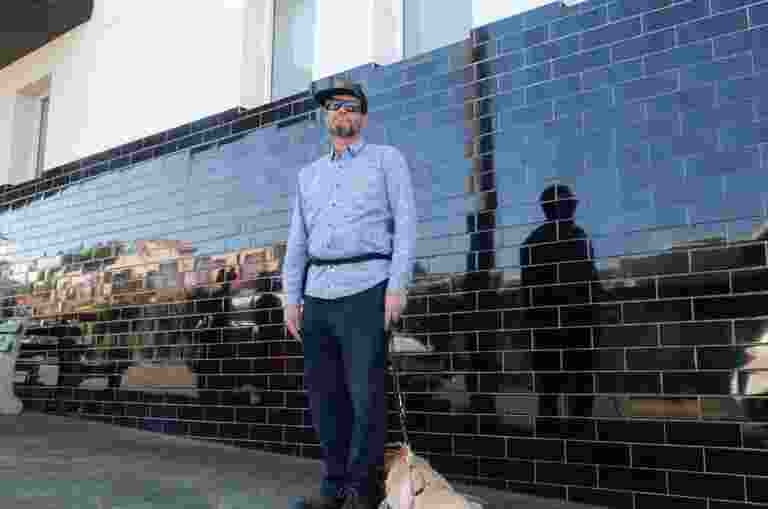
“When I first started using a long cane over 15 years ago, I never thought I would end up with a Guide Dog. Now I’ve been with my Guide Dog, Quanti, for a little under a year, and it has been the best decision I ever made,” says Brian.
When Brian was 23 years old, he was tested for Retinitis Pigmentosa because his mother had been diagnosed with the same genetic condition. It was then when Brian found out he also had the condition. Slowly, his vision started to deteriorate and everyday tasks became difficult. “Along the way, my license was due and when I went for an assessment, it came back negative and I couldn’t drive,” said Brian. “I was devastated when I stopped driving, and I went through a period of grief. I carried my car keys in my pocket for months after that because I couldn’t let them go.”
It took Brian a little while to be ready to start long cane training after his Optometrist recommended Guide Dogs NSW/ACT. He was reluctant at first, but as soon as he started training, he knew it was the right move. “In hindsight, it was better to have learned it earlier before I desperately needed it and as my need increased, I wasn’t trying to catch up on my skills later on,” said Brian.
Even though he was grateful to have learned how to use a cane, he was still embarrassed to use it in public. “I didn’t want anyone I knew to see me using it.” The stigma that surrounds people with disability is still very much prevalent in society, and for a person with low vision or blindness, it often takes encouragement from family members and friends to accept help, whether that be through mobility aids, assistive technology, or additional support services.
The best parts about having a Guide Dog
When it was time to enquire about a Guide Dog, the transition happened naturally for Brian, and being matched with Quanti was relieving in more ways than one. “I find there is less of a mental load on me when I’m with him. I do a lot of walking, but there were times with my cane where it took more mental effort to manage my walks every time. The level of concentration I had to have didn’t allow me to relax because I had to make sure I kept exactly on the path and off the road,” says Brian.
Brian explains it like a Ven-diagram; the three best intersecting parts about having a Guide Dog are safety, functionality (including being able to do things he couldn’t do before), and emotional wellbeing. These three aspects overlap substantially and are what Guide Dog, Quanti provides for Brian every single day. That, and an unbreakable bond. “During my training with him, I was walking along the road, and the sun was shining in my eyes so I couldn’t see. So, I shut my eyes and enjoyed the journey. That’s the level of trust I have in Quanti.”
Quanti becomes everyone’s favourite colleague
Brian talks to Quanti and Quanti offers the support and reassurance Brian needs to navigate safely around his community and beyond. When Brian travels to work on a steel manufacturing site, he does it with Quanti by his side, who has become a very popular work colleague. Around the office and work site, Quanti is loved by everyone he meets, and has become a fixture at Brian’s workplace. “He lifts the emotional energy of the entire building,” says Brian.
Brian has all the praise in the world for Guide Dog, Quanti, as he has changed his life. Reducing stress, mental burnout and becoming a shoulder to lean on, are just some of many hats Quanti wears when he’s working. Along with finding seats on public transport and weaving around obstacles obstructing the footpath, Quanti does it all and at the end of the day, when his harness comes off, he loves a cuddle and a play with his family. After all, he’s still a boisterous dog at heart.