.jpg?rect=0,414,7912,4451&w=3200&h=1800&fit=min&auto=format&q=90)
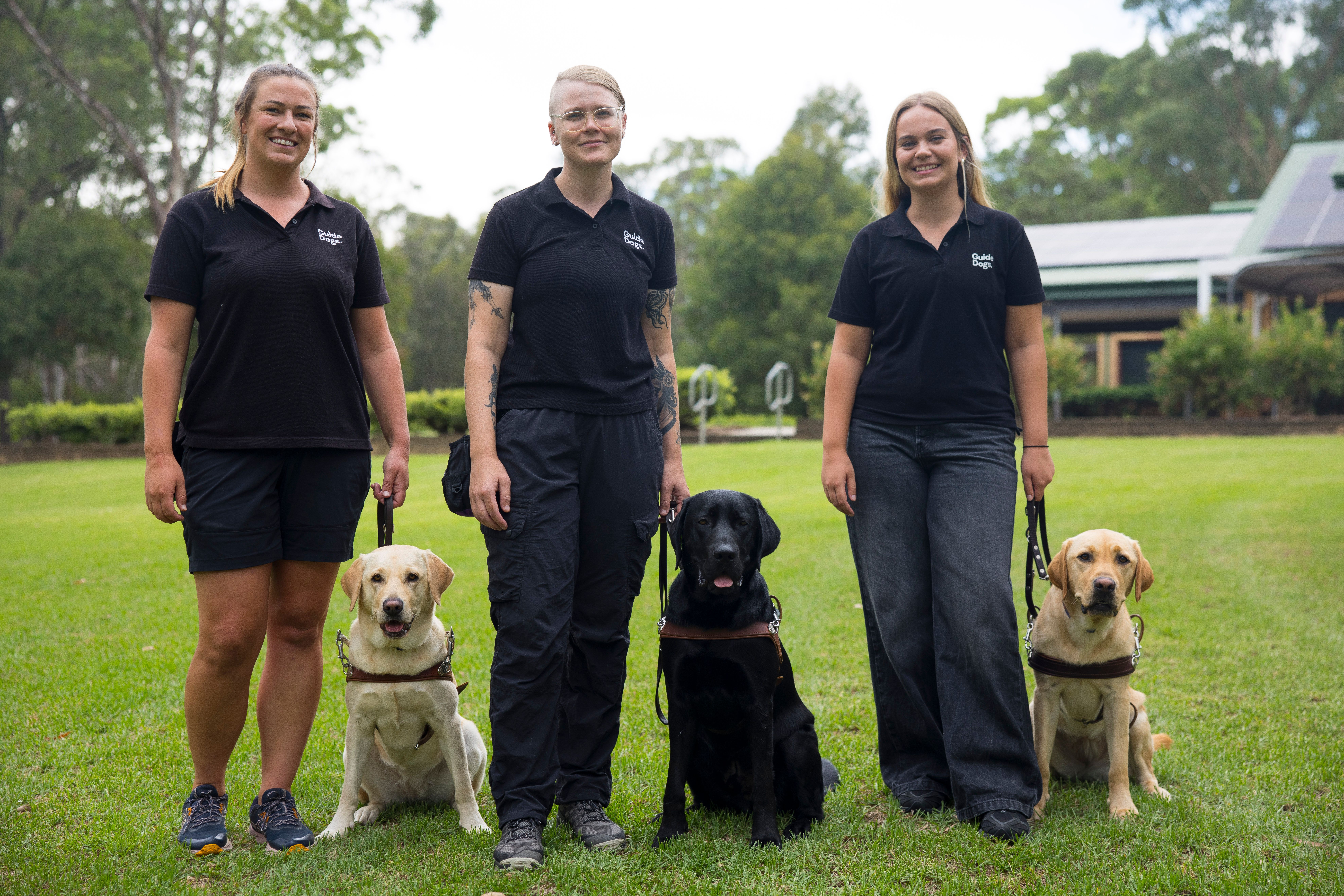
Guide Dog mobility services.
Learn how the powerful partnership between a person with low vision or blindness and a Guide Dog can support greater independence and confidence.
Do you need a Guide Dog? A Step-by-Step Guide to Finding Out.
If you're blind or have low vision and are considering a Guide Dog, it's important to understand both the benefits and responsibilities involved. A Guide Dog can provide greater independence, confidence and mobility, but it is also a significant long-term commitment.
What is Guide Dog Mobility?
A Guide Dog is a highly trained assistance animal that helps people who are blind or have low vision navigate their surroundings safely and independently. Guide Dogs can help handlers avoid obstacles, stop at kerbs and steps, find familiar destinations, and travel more efficiently through busy environments.
A Guide Dog can help you:
- Travel more smoothly through crowded or complex environments.
- Avoid obstacles in your path.
- Maintain a straighter line of travel.
- Locate familiar landmarks, doors, shop counters and pedestrian crossing poles.
- Build confidence and reduce stress when travelling independently.
It's also important to understand what a Guide Dog cannot do.
A Guide Dog cannot:
- Decide when it is safe to cross a road.
- Act as a GPS or guide you to unfamiliar destinations without training.
- Replace the orientation and mobility skills needed for independent travel
Who can get a Guide Dog, and how do I qualify?
People who are blind or have low vision may be eligible for a Guide Dog if they require a primary mobility aid and regularly travel in their community.
Every person is assessed individually. An Orientation and Mobility specialist will work with you to determine whether Guide Dog mobility is the most suitable option for your travel goals, lifestyle and mobility needs.
.jpg?w=3200&h=4798&auto=format&q=90)
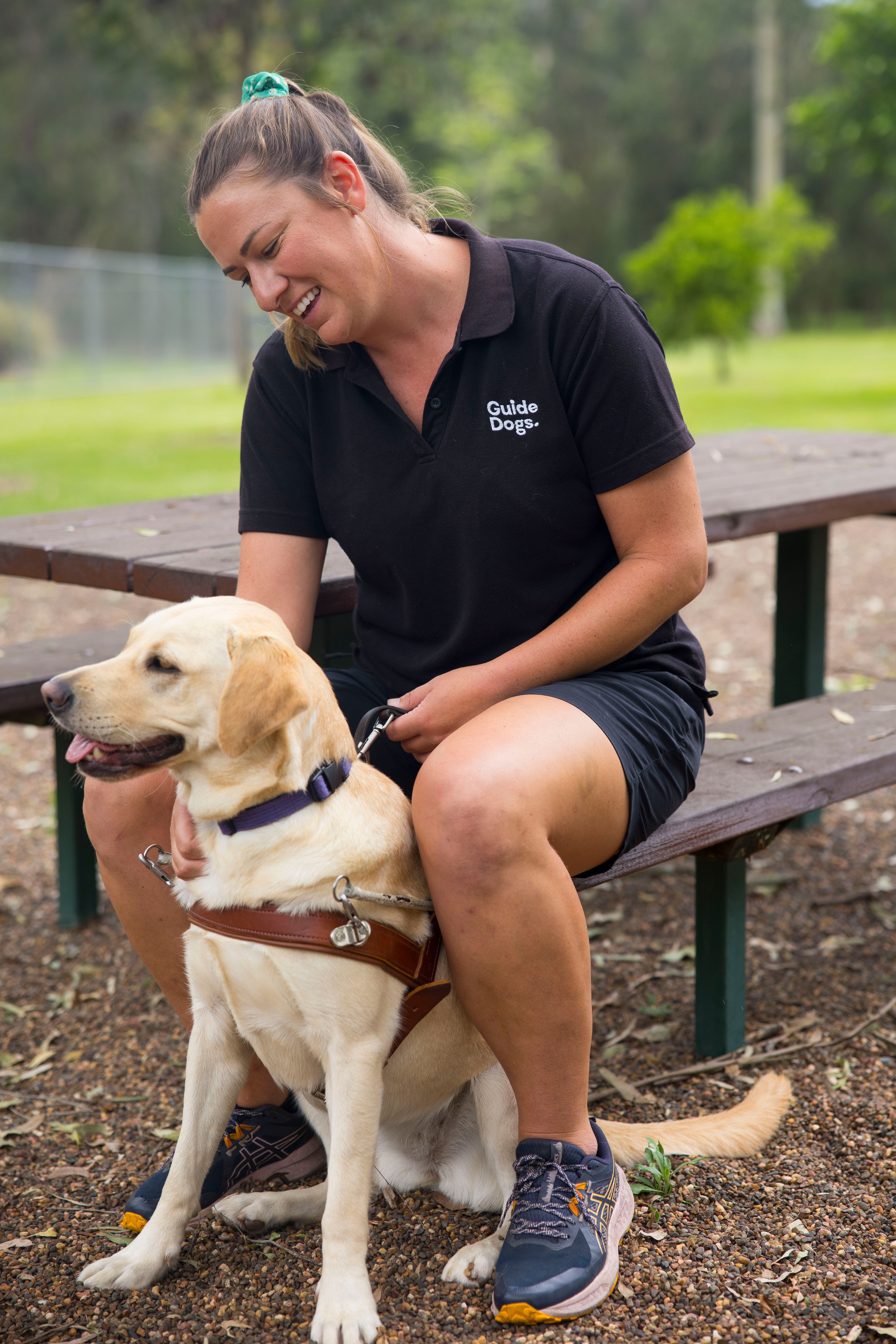
Questions to Ask Yourself Before Getting a Guide Dog.
The Guide Dog self-assessment checklist encourages prospective applicants to consider whether they are ready for the commitment. Key questions include:
- Do I rely on a mobility aid such as a long cane for most independent travel?
- Can I walk independently several times a week?
- Can I walk for at least 45 minutes, or am I willing to build up to that level?
- Am I confident finding my way and solving mobility challenges independently?
- Am I comfortable having a dog with me every day?
- Can I dedicate time to daily grooming, health checks, feeding and exercise?
- Am I financially prepared for ongoing costs such as food, veterinary care and other expenses?
- Can I commit to several weeks of intensive training?
- Do I have someone who could care for the dog in an emergency?
How do you find out if you’re eligible for a Guide Dog in Australia and what the assessment process looks like?
If you're considering a Guide Dog, Guide Dogs NSW/ACT can help you understand your eligibility and the assessment process.
The process typically begins with a discussion about your vision, lifestyle, travel needs, and goals.
Specialists then assess whether a Guide Dog is the right mobility option for you and determine the most suitable support to help you travel safely and independently. If a Guide Dog is recommended, the team will explain the next steps and available training.
Step 1: Learn About Guide Dog Mobility
Start by reading the Guide Dog Information Pack and learning about the role of a Guide Dog, the responsibilities of handlers and the training process.
Step 2: Attend an Information Session or Experience Day.
If you are considering Guide Dog mobility, attending an Information Session or Experience Day can help you make an informed decision. These group programs give you the opportunity to:
- Learn how Guide Dog mobility works.
- Understand the responsibilities of Guide Dog ownership.
- Meet people who are also considering a Guide Dog.
- Bring a family member, carer or support person.
- Ask questions about training, lifestyle and suitability.
Sessions are available to existing Clients and people who are blind or have low vision who have previously worked with an Orientation and Mobility specialist.
Step 3: Complete the Self-Assessment.
Review the self-assessment checklist(opens in new tab) to evaluate your readiness and suitability for Guide Dog Mobility.
Step 4: Apply for an Assessment.
If you feel ready, contact Guide Dogs NSW/ACT to . Applications can be made by calling 1800 436 364.
Step 5: Complete a Guide Dog Mobility Assessment.
A qualified Guide Dog Mobility Instructor (GDMI) will conduct an assessment in two parts:
- A phone or telepractice assessment discussing your lifestyle, travel needs and ability to care for a Guide Dog.
- An in-person assessment at your home, including a review of your mobility skills and home environment.
Step 6: Funding Support.
If approved, Guide Dogs NSW/ACT can provide documentation and support to explore funding options. Funding may be available through:
- National Disability Insurance Scheme (NDIS)
- Department of Veterans' Affairs (DVA)
- My Aged Care
- Donor-funded programs
Step 7: Training and Matching.
Once approved, you'll be added to a waiting list while a suitable Guide Dog match is identified. Training typically runs for three to four weeks and focuses on:
- Working effectively with your Guide Dog.
- Learning commands and handling skills.
- Caring for your dog.
- Building confidence across different environments.
Our team will also provide ongoing support for Guide Dog Handlers. If a partnership is not the right fit, our team can assess the situation, provide guidance and discuss options that support your mobility and wellbeing. The goal is always to find the safest and most effective mobility solution for each person.

Hear from Handlers about their life-changing Guide Dog partnerships.
Every Guide Dog partnership is unique, but they all share a common thread: greater confidence and independence navigating daily life, along with loving companionship.
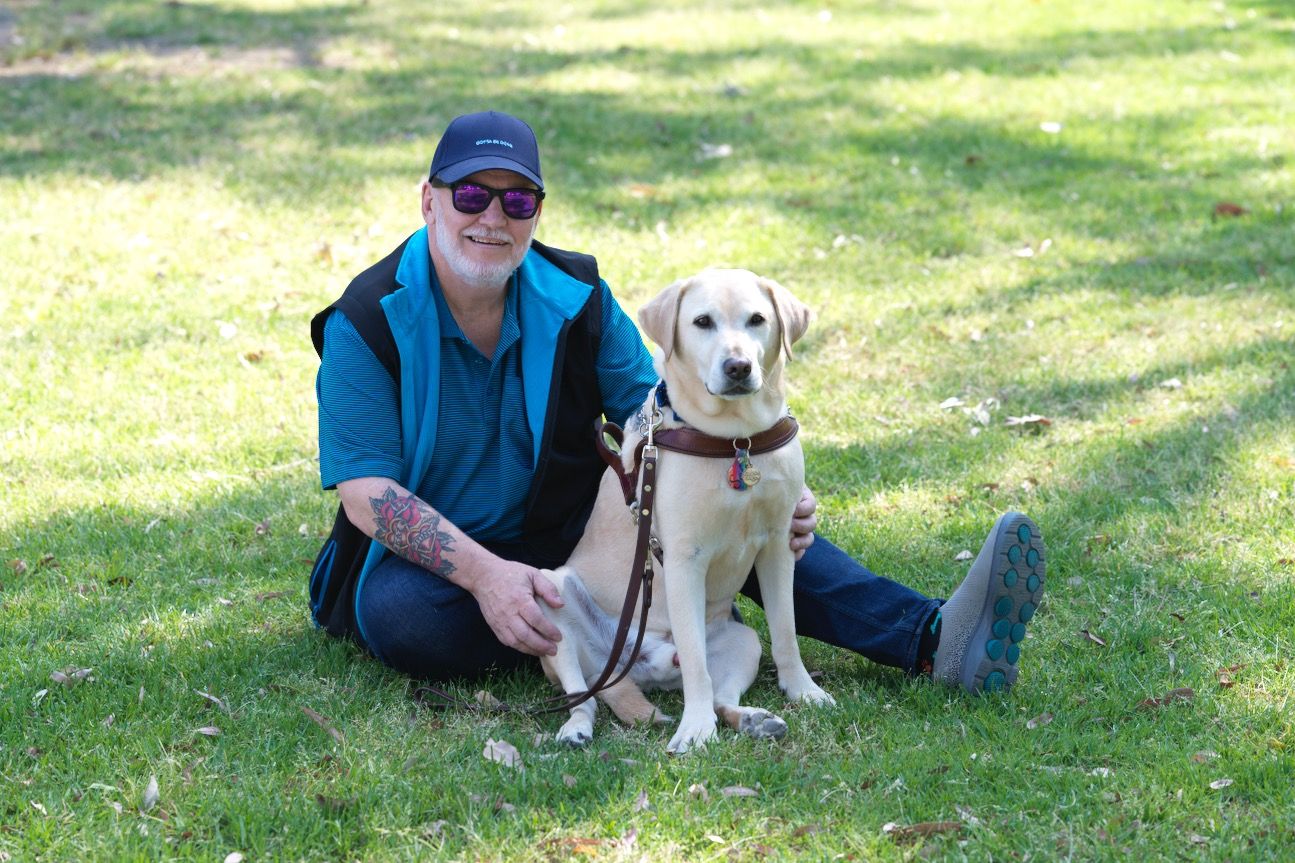
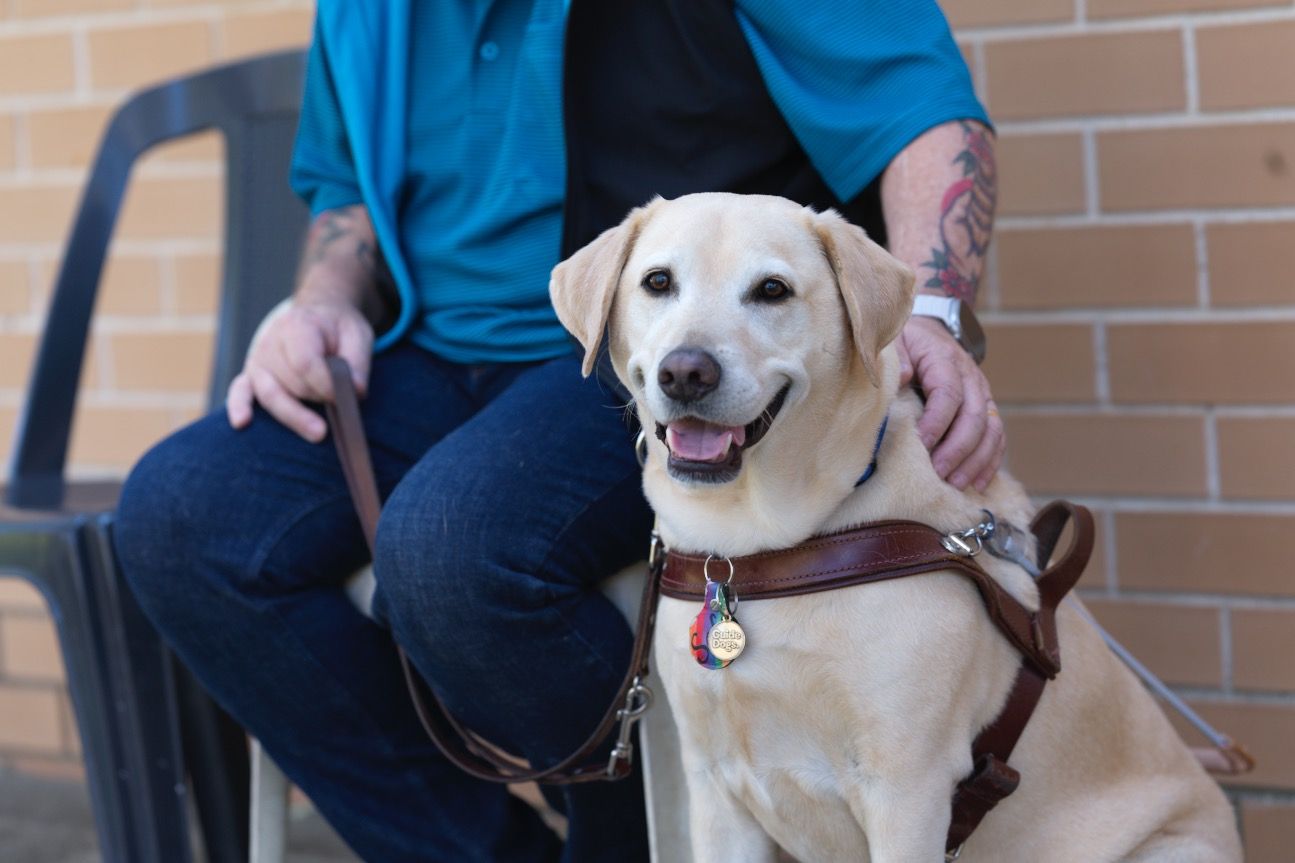
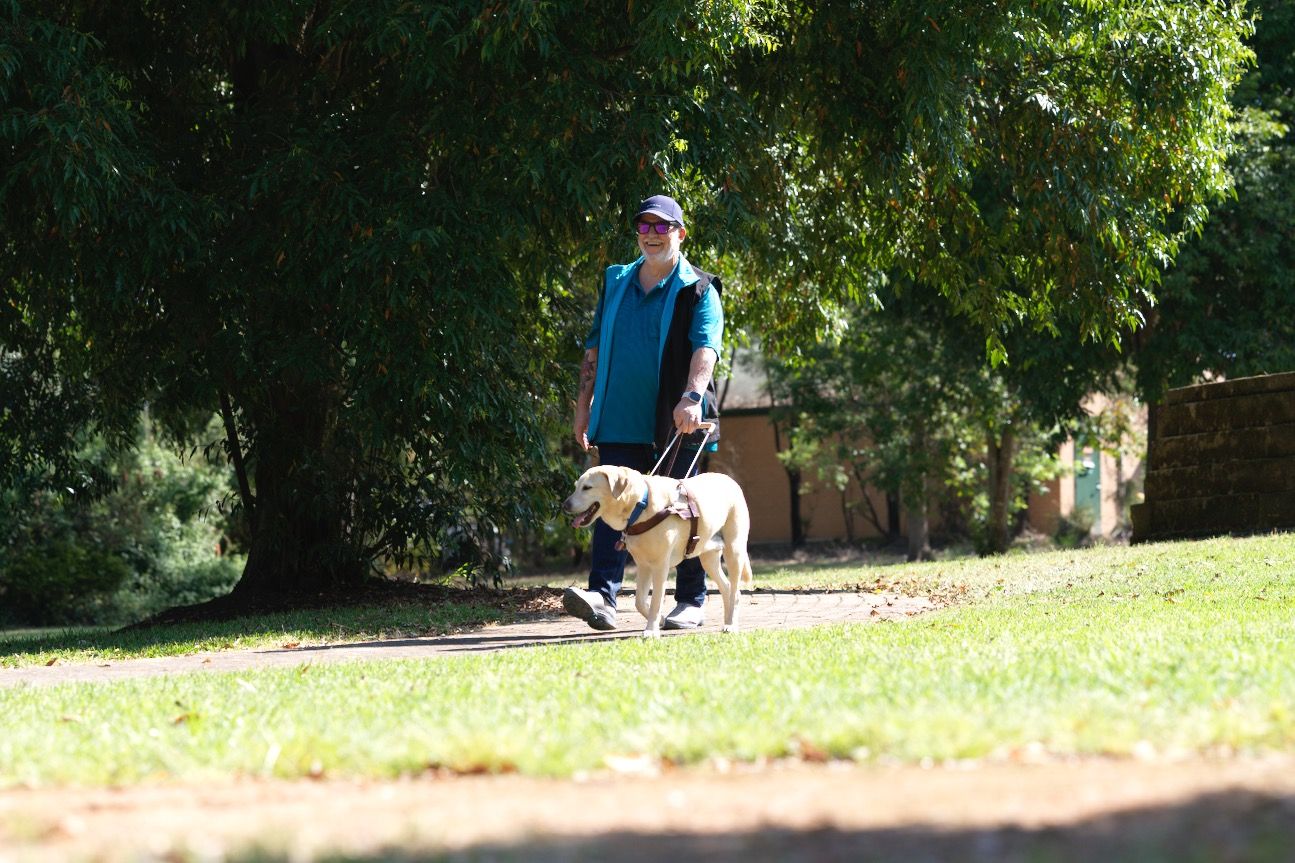
Meet Tony and Solo
After being a cane user for many years, Tony decided it was time for a Guide Dog. That’s when Solo came into his life! On February 14 the stars aligned, and Tony and Solo began their journey together.
“It’s life-changing to go from not doing things independently to now having the world at your feet,” says Tony.
With Solo at his side, Tony can move independently throughout his everyday life. Their favourite activity to do together is exploring. Whether it’s a beach walk, bush walk, or a trip to the supermarket, Tony can do it all with Solo by his side.
“He’s not just a Guide Dog; he’s a family member.”
%20(2).jpg?rect=111,0,1057,708&fp-x=0.4933411841465865&fp-y=0.410069147928913&w=1024&h=298&fit=crop&crop=focalpoint&auto=format&q=90)
.jpg?rect=217,0,863,863&w=1200&h=1200&fit=min&auto=format&q=90)
.jpg?rect=217,0,863,863&w=1200&h=1200&fit=min&auto=format&q=90)
Frequently asked questions.
A person with significant vision changes who requires a primary mobility aid, such as a long cane, to travel independently and safely may be a suitable applicant for a Guide Dog and Guide Dog Mobility training. Applicants must be physically fit enough to provide their Guide Dog with the required exercise and care. They also need to be willing and motivated to put in the effort needed to learn how to work as a team.
Guide Dogs are highly trained assistance animals. Their skills and temperament meet the International Guide Dog Federation’s standards for supporting the independent mobility of people who are blind or have low vision. A person who works with a Guide Dog is called a Guide Dog Handler. Together, the Handler and Guide Dog form a special partnership, each playing a vital role in achieving the best mobility outcomes.
Guide Dogs can:
- Assist the Handler to avoid obstacles in their immediate path.
- Stop at changes in surface level, such as kerbs or steps.
- Locate destinations they have been taught to find.
Guide Dogs cannot:
- Assess traffic flow and decide when it is safe to cross the road.
- Guide to any destination in a new location. (A Guide Dog is not a GPS; it must be trained to target new objectives such as landmarks or buildings.)
A Guide Dog may provide faster and more fluid mobility through complex environments, such as crowded areas, giving you greater confidence and less stress when navigating to destinations. A Guide Dog can locate various objects for you, such as doors, shop counters and poles for light-assisted crossings. They can also maintain a straight line of travel, for example, when crossing the road or supporting you to align with access ramps.
Once you have been successfully matched and formed a Guide Dog partnership, you’ll start training together. Training programs are tailored to each individual’s needs. They typically run for three to four weeks (or as long as you need). To achieve the best possible outcome during this training period, you’ll need to be available each weekday.
Training can take place either at your home or in a residential class program at a motel. If your home life is busy, it can be a good idea to bond with your dog in a location that enables you to focus on your new skill development and your partnership with your dog. You will still receive training in your home once this initial training is complete. Guide Dog Mobility training often allows for more than one Client to be present, which can provide opportunities for peer support and new connections.
As training progresses, the Handler and Guide Dog Team moves on to travelling in more complex and dynamic environments.
Training also includes:
- public transport
- shopping centres
- traffic awareness
- cafés
- other environments you might frequent regularly.
You must be able to maintain the health and wellbeing of your dog; Guide Dogs need to stay happy and healthy to complete their important work!
You’ll be responsible for daily health checks, grooming and ensuring that your Guide Dog has plenty of exercise, along with time to play and enjoy being a dog.
You should also care for your dog’s basic needs, such as providing food and water and ensuring a safe, secure place for rest and exercise. Additionally, you should provide your dog with access to communal areas and make sure they feel like a welcomed member of the household.
It’s also important to maintain and develop your Guide Dog’s skills by reinforcing their training and maintaining a routine, especially in the early stages of the partnership.
Following your initial training, you’ll continue to receive support and training through our in-person follow-ups. These will occur at one, three, six and 12 months in the first year, then annually until your dog turns eight.
You can also contact us at any time if you need help addressing any issues with your dog or learning new routes and destinations together.
What happens when Guide Dogs retire?
Like all of us, dogs eventually get older and start to slow down. After your Guide Dog turns eight, in-person follow-ups will occur every six months until your dog retires.
Deciding when to retire a Guide Dog is one of the hardest decisions a Guide Dog Handler will make, and our instructors will work closely with you to help make the right decision for you and your dog.
When a Guide Dog retires, in most cases they will continue living with the Handler as a pet in well-deserved retirement.
If it is not possible for the dog to continue living with their Handler, the Handler can nominate a family member or friend to look after the dog in their retirement. If needed, Guide Dogs NSW/ACT can help find a loving home for the Guide Dog on retirement.
A Handler or a designated carer can access a $1,000 annual retired Guide Dog fund to help support their dog’s ongoing care. As a Handler, it’s your choice how you’d like to arrange your Guide Dog’s retirement. There is no right or wrong decision, and we understand that everyone’s circumstances differ. That’s why we are here to support you every step of the way.

What are my rights when travelling with a Guide Dog in Australia?
Guide Dogs NSW/ACT is a trusted source of information about the rights of Guide Dog Handlers when using transport services in Australia.
We provide advocacy, community education and support to help people understand their rights when travelling with a Guide Dog on public transport, including trains, taxis, rideshare services and other transport networks.
People seeking information can also contact relevant transport operators and government agencies responsible for accessibility and disability discrimination protections.
What happens when a Guide Dog retires?
After years of working together, retirement brings a new chapter for a Guide Dog and their Handler. Lee Kumutat recently experienced this when Guide Dog Frankie retired after more than eight years together and Guide Dog Ollie became Lee’s new Guide Dog.
Read more.
How are Guide Dogs trained?
At Guide Dogs NSW/ACT, staff and volunteers are committed to all stages of a Guide Dog’s life. Guide Dogs are purpose bred to inherit good health and temperament.
Our puppies are born in a family home, and our Breeding and Whelping Advisors support their growth and development. They are socialised with their litter mates and mother and participate in specially designed programs until they are eight weeks old.
They then move to a Puppy Raiser’s home, where they live for 12 months. These Puppy Raisers, supported by our Puppy Development Advisors, give our dogs love and care while teaching basic skills and ensuring the dogs attend regular training and socialisation sessions.
Once a dog reaches 14 months old, they return to the Guide Dog Centre for assessment and training. They then spend five months in an intensive program where the Guide Dog Trainers develop their confidence and skills.

Our team provides ongoing support throughout your Guide Dog partnership. This includes follow-up training, regular check-ins and access to advice if your circumstances change. Every Guide Dog partnership is unique. Ongoing support helps both Handler and dog continue to work safely and confidently together.
What makes a great Guide Dog?
Every Guide Dog must meet rigorous training and assessment standards before being matched with a handler. To become match ready, a Guide Dog must demonstrate a range of mobility and public access skills and successfully complete a series of assessments, including blindfold walks and other practical evaluations. Guide Dogs must also meet International Guide Dog Federation (IGDF) standards before they can be matched with a Client.
Throughout their working life, Guide Dogs are required to meet public access standards under NSW and ACT legislation. Maintaining these standards is important because a handler can legally be refused entry to a venue or premises if their Guide Dog does not meet the required public access requirements.
A great Guide Dog is more than a dog that has completed its training. A great Guide Dog is one whose needs are met, whose training is maintained, and who is supported to succeed throughout its working life. The strongest Guide Dog partnerships are built on consistency, trust and ongoing learning. A well-trained Guide Dog continues to develop confidence, skills and experience alongside its handler.
Through regular practice, encouragement and shared experiences, the team grows and learns together over many years.

What’s the typical wait time in Australia to be matched with a Guide Dog once you’re approved?
There is no single Guide Dog matching time that will apply to every person. Matching involves finding a dog suited to an individual Client’s needs and circumstances.
Our Guide Dog training and matching approach considers personal preferences, needs, the dog’s personality and temperament.
Ask about current matching expectations during your assessment rather than relying on a general national estimate.
Need more information on access rights?
Guide Dogs NSW/ACT provides information to help people understand their rights and responsibilities when travelling with a Guide dog.
Learn more.
Find out more.
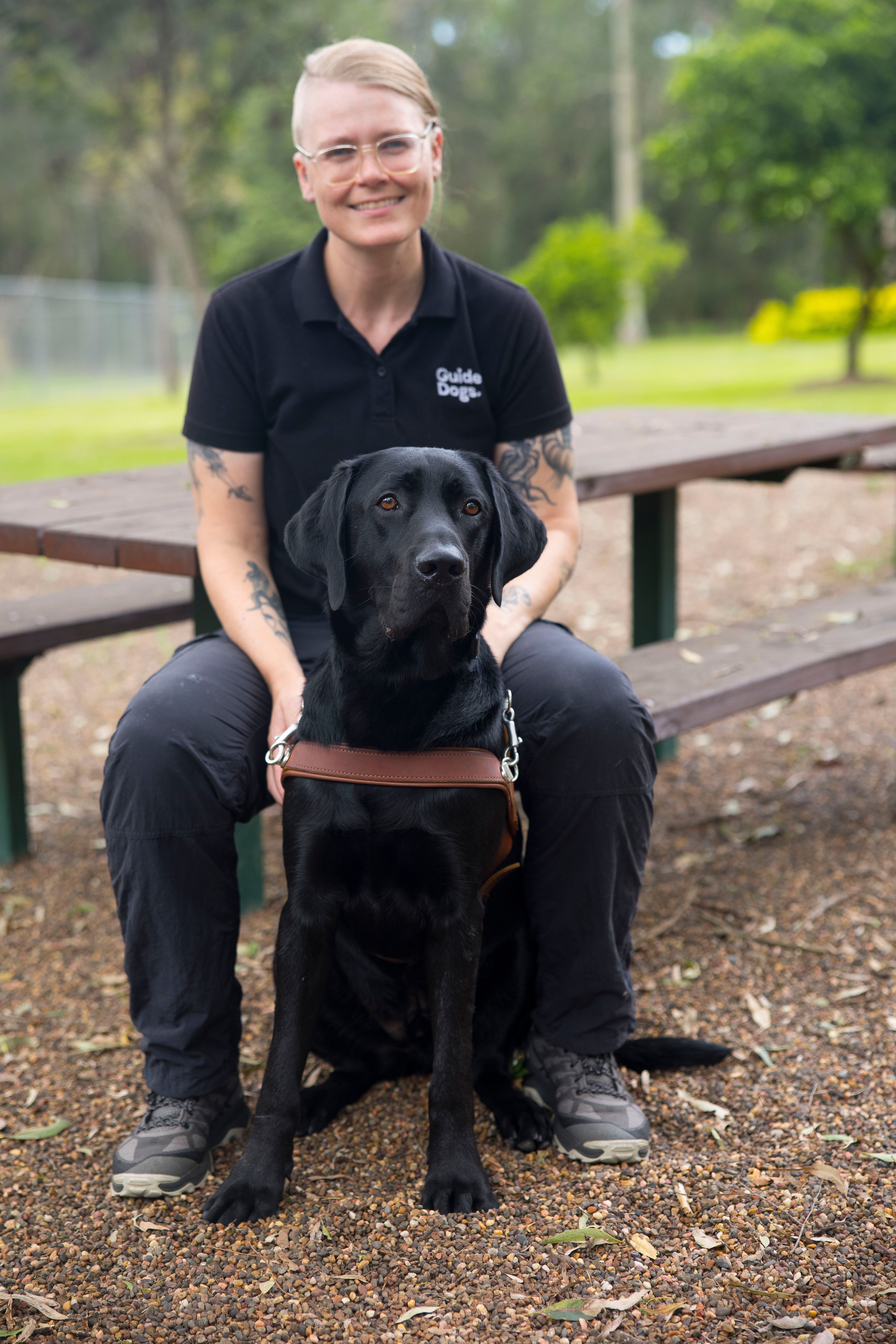
Guide Dog Training
.jpg?rect=0,1681,5464,4173&fp-x=0.5&fp-y=0.4599279276966659&w=320&h=240&fit=crop&crop=focalpoint&auto=format&q=90)
What is Orientation and Mobility?
A set of concepts, skills and techniques that teaches adults or children with low vision or blindness how to move around their environment safely.
Occupational Therapy
We can support you to live more independently, safely and do the everyday things that matter most to you with confidence.

Explore our services
.jpg?rect=0,1681,5464,4173&fp-x=0.5&fp-y=0.4599279276966659&w=3200&h=2400&fit=crop&crop=focalpoint&auto=format&q=90)

